Preparing Your Garden for Summer: Set It Up Now Before the Heat Arrives
In Florida, summer doesn’t slowly ease in.
One day the weather feels pleasant, and the next you’re walking outside into heat, humidity, afternoon storms, and plants suddenly struggling to keep up. By the time most homeowners notice stress in their landscape, summer has already taken hold — and recovery becomes much harder.
The secret to a successful Florida garden isn’t reacting to summer.
It’s preparing for it before it arrives.
Late winter and early spring are your window of opportunity to strengthen your landscape so it can handle the months ahead with less stress, less maintenance, and far fewer plant losses.
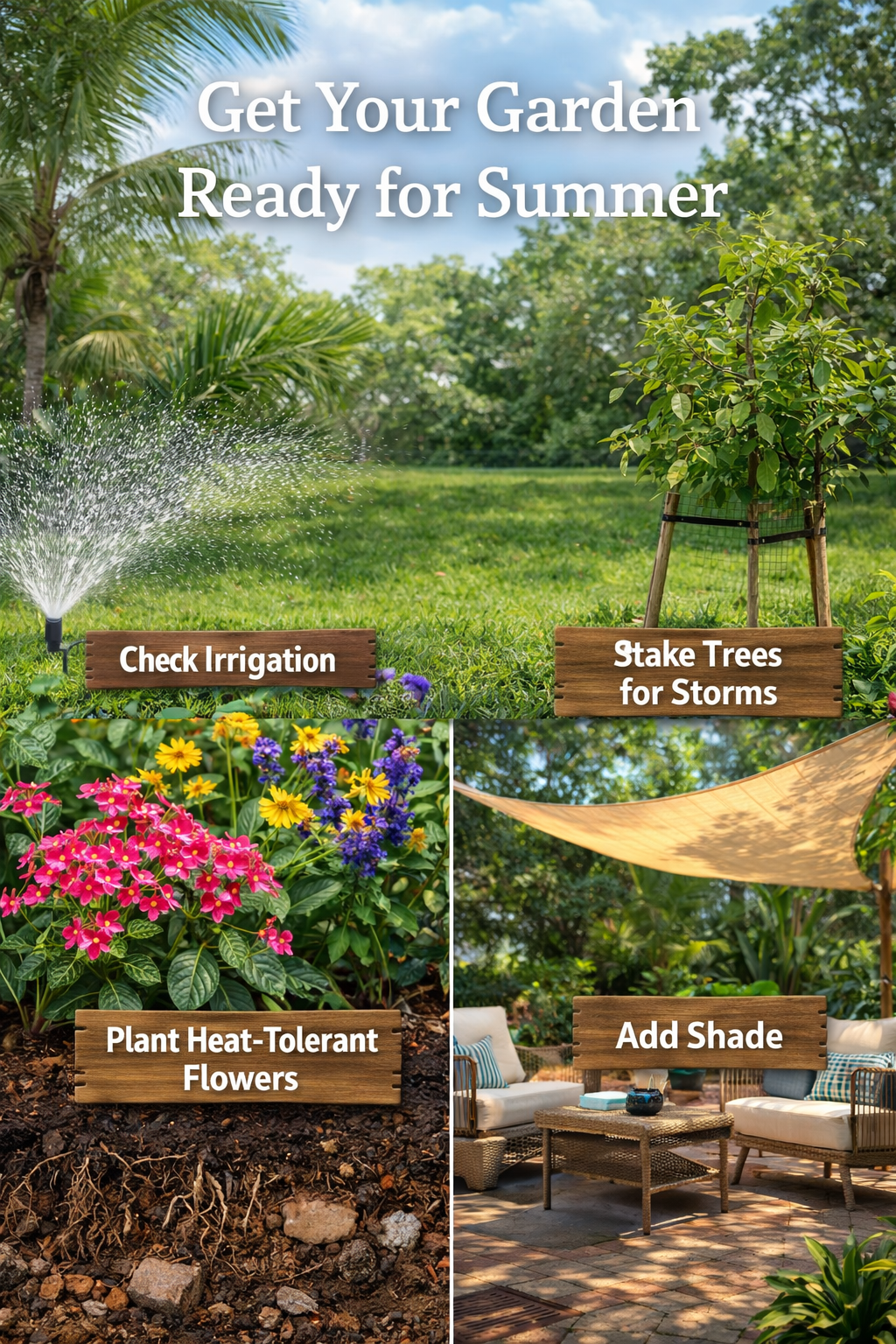
Check Your Irrigation Before You Need It
Your irrigation system quietly becomes the most important part of your landscape during summer — yet it’s often ignored until something starts dying.
Now is the time to run every zone and actually watch what happens.
Make sure:
Sprinkler heads are not clogged or broken
Coverage reaches plant roots, not sidewalks or driveways
Drip lines are functioning properly
Overspray isn’t hitting walls or fences
Timers are programmed correctly
Plants entering summer already dehydrated struggle quickly once temperatures rise. Consistent, deep watering early in the season helps roots grow deeper and become more resilient.
Also remember that watering needs change as daylight increases. Systems programmed for winter conditions are rarely sufficient heading into summer heat.
Plant Now — Not in June
One of the biggest mistakes I see each year is waiting too long to plant.
Spring is the ideal time to install trees, shrubs, and perennials because plants still have time to establish roots before extreme heat arrives. Once soil temperatures climb and nighttime heat remains high, new plantings face constant stress.
Installing plants now allows them to:
Develop stronger root systems
Adapt gradually to rising temperatures
Require less intensive watering later
Florida-friendly and native plants perform best when given a head start before summer’s intensity.
By June, planting becomes survival mode. Right now, planting is establishment mode.
Prepare Trees for Storm Season
Summer in Florida also means storm season.
Young trees — especially newly planted ones — are vulnerable to wind damage if they aren’t properly supported. Take time now to check staking before afternoon thunderstorms become routine.
Look for:
Loose or leaning trees
Stakes rubbing against trunks
Ties that are too tight
Insufficient support for top-heavy canopies
Proper staking stabilizes roots while still allowing slight movement, which helps trees develop strength. Waiting until storms arrive often means correcting damage rather than preventing it.
A few minutes of preparation now can save a tree later.
Transition Out of Winter Flowers
Those beautiful winter annuals that carried color through cooler months are nearing the end of their performance.
As temperatures climb, cool-season flowers begin to decline no matter how well they’re cared for. Replacing them early keeps landscapes looking fresh while preventing tired, stressed plantings.
Swap winter flowers for heat-tolerant options such as:
Pentas
Vinca
Angelonia
Salvia
Coreopsis
These plants thrive in Florida’s summer conditions and continue attracting pollinators even during the hottest months.
Making the transition before heat stress sets in helps new plants establish quickly and maintain continuous color.
Create Shade Before You Need It
Summer sun in Florida is intense — not just for people, but for plants and outdoor living spaces.
Adding shade elements now can dramatically improve comfort and plant performance later.
Consider:
Shade sails over patios or seating areas
Umbrellas for container gardens
Pergolas or temporary shade structures
Strategic placement of large containers or taller plants
Shade reduces soil temperatures, slows moisture loss, and creates usable outdoor spaces even during peak heat.
Sometimes the difference between enjoying your garden in summer and avoiding it altogether is simply having a place protected from direct sun.
Mulch Is Your Summer Insurance
If there’s one task that pays off immediately, it’s refreshing mulch.
A proper mulch layer:
Retains soil moisture
Regulates soil temperature
Suppresses weeds
Builds organic matter over time
Heading into summer storms and heat cycles, mulch acts as insulation for plant roots. Aim for a consistent two to three inches, keeping mulch slightly away from trunks and stems.
Think of mulch as protection against both drought and heavy rain.
Set Your Landscape Up to Thrive
Florida summers are demanding, but they don’t have to be destructive.
A landscape that enters summer healthy, hydrated, supported, and well-planned requires far less intervention once heat and storms arrive. Preparation now means fewer emergency replacements, less stress on plants, and more time simply enjoying your outdoor space.
Because once summer settles in, the goal isn’t major changes.
It’s maintenance, resilience, and survival.
A little preparation today allows your garden to move into summer strong — ready for sunshine, storms, pollinators, and long evenings outdoors. 🌿