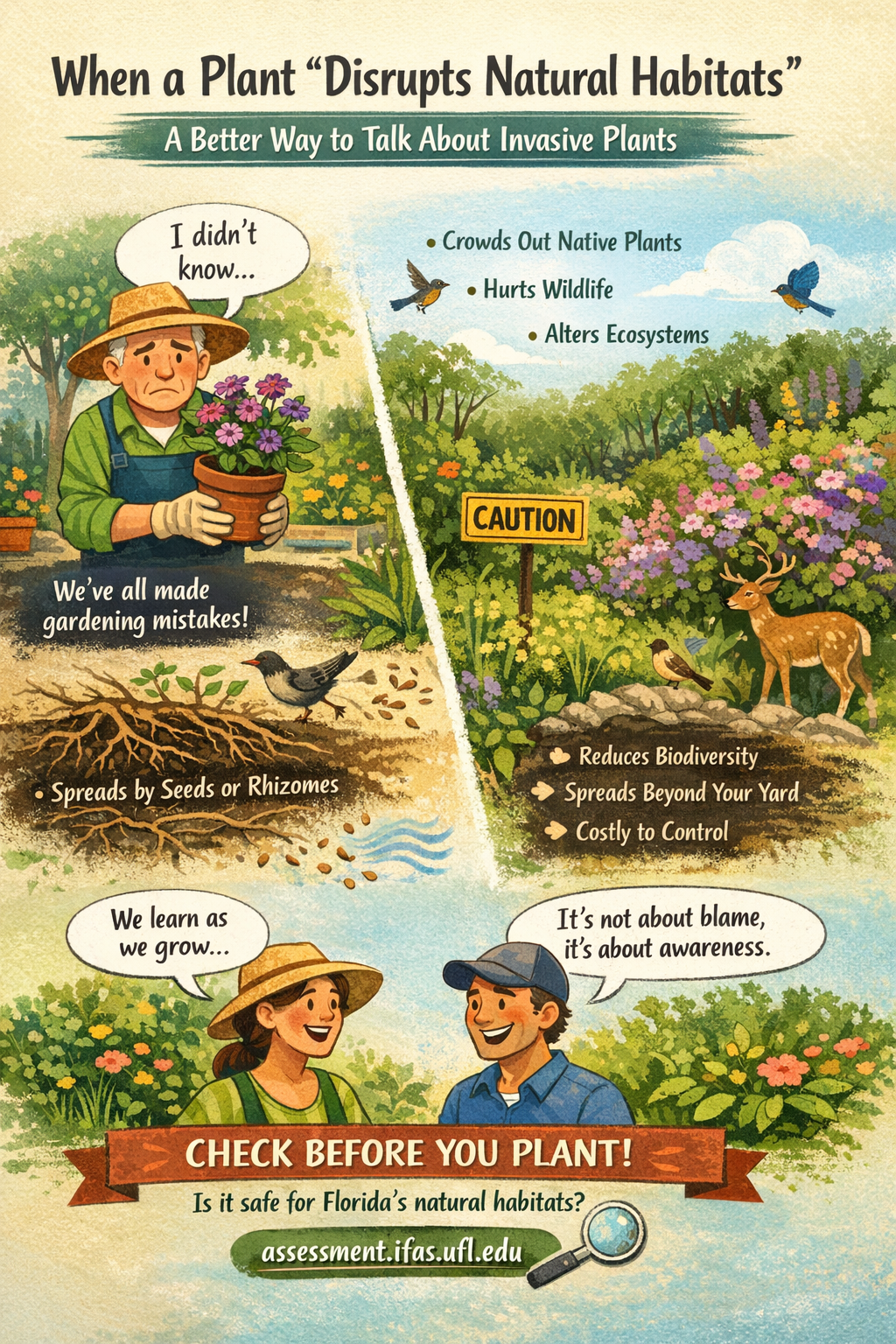
When a Plant “Disrupts Natural Habitats”: A Better Way to Talk About Invasive Plants
If you’ve ever been told that a plant in your garden is invasive, you may have felt a little defensive. I see it all the time. The word itself feels harsh—almost accusatory. It can sound like you’ve done something wrong, when in reality, you likely chose a plant because it was pretty, easy, or recommended at the time.
So let’s shift the conversation.
Instead of leading with the word invasive, let’s talk about plants that “disrupt natural habitats.”
Because that’s really what we mean—and it’s a lot easier to understand why it matters without the emotional weight.
What Does “Disrupting Natural Habitats” Actually Mean?
A plant that disrupts natural habitats is one that:
Spreads beyond where it was planted
Outcompetes native plants for space, water, and nutrients
Changes the balance of the ecosystem
Reduces food sources and habitat for wildlife
These plants don’t just stay in your yard. They move—often quietly and without you realizing it.
And that’s the key issue: it’s not about your intention, it’s about the plant’s behavior.
Invasive vs. Aggressive: Let’s Clear This Up
These two terms get mixed up a lot, but they are not the same.
Aggressive Plants
Grow quickly and can take over a garden bed
Stay mostly contained to where they’re planted
Manageable with regular maintenance
👉 Think: a plant that needs frequent trimming or dividing but stays in your landscape.
Plants That Disrupt Natural Habitats (Invasive)
Spread beyond your property into natural areas
Can travel by seed, wind, birds, water, or underground roots (rhizomes)
Are difficult (and costly) to control once established
👉 These are the plants that move into preserves, wetlands, and wild spaces—and change them.
Why This Matters (More Than You Think)
This isn’t just a gardening preference—it’s an environmental issue.
These plants crowd out native species that wildlife depend on
They can alter soil chemistry and water flow
They reduce biodiversity (fewer plants = fewer insects, birds, and pollinators)
They cost billions of dollars every year to manage and remove
And here’s the part most people don’t realize:
👉 You can be doing everything “right” in your own yard…
…and the plant can still spread elsewhere without you knowing.
“But Mine Isn’t Spreading…”
This is where the conversation often gets stuck.
When someone hears “that plant is invasive,” the natural reaction is:
“Mine hasn’t spread.”
“I keep it trimmed.”
“I’ve never had an issue.”
And I get it—that’s a completely normal response.
But here’s the reality:
Some plants spread by seed carried by birds or wind
Others spread underground through rhizomes, popping up in places you’ll never see
Some escape slowly, over time, and show up far from where they were planted
So even if it looks well-behaved in your yard, it may not be staying there.
It’s Not About Blame—It’s About Awareness
We all have to learn somewhere—and making mistakes is part of gardening.
Every gardener, at some point, has planted something they later realized wasn’t the best choice. It’s not a personal attack. It’s not about being “wrong.” It’s about learning as we go.
That said, conversations around this topic can sometimes feel… a little intense. Gardeners and environmentalists can come across as a bit righteous at times, especially when they’re passionate about protecting natural spaces.
But here’s the truth:
👉 Even if only some people listen and make small changes, it still lessens the impact on our natural habitats.
And that matters.
What You Can Do Moving Forward
Before purchasing a plant, take a minute to check whether it’s known to disrupt natural habitats in Florida.
A great resource is:
👉 UF/IFAS Assessment of Non-Native Plants
This tool helps you determine whether a plant is:
Not a problem
Needs caution
Or is known to disrupt natural ecosystems in Florida
A Better Way to Garden in Florida
As Florida gardeners, we’re working in a unique environment—one where plants grow fast, spread easily, and don’t always follow the rules we learned elsewhere.
Choosing plants that:
Stay where they’re planted
Support pollinators and wildlife
Thrive in our climate without taking over
…is one of the most powerful things we can do.
Final Thought
Instead of asking:
👉 “Is this plant invasive?”
Try asking:
👉 “Could this plant disrupt the natural habitats around me?”
It’s a small shift in language—but a big shift in perspective.
And that’s where better gardening begins