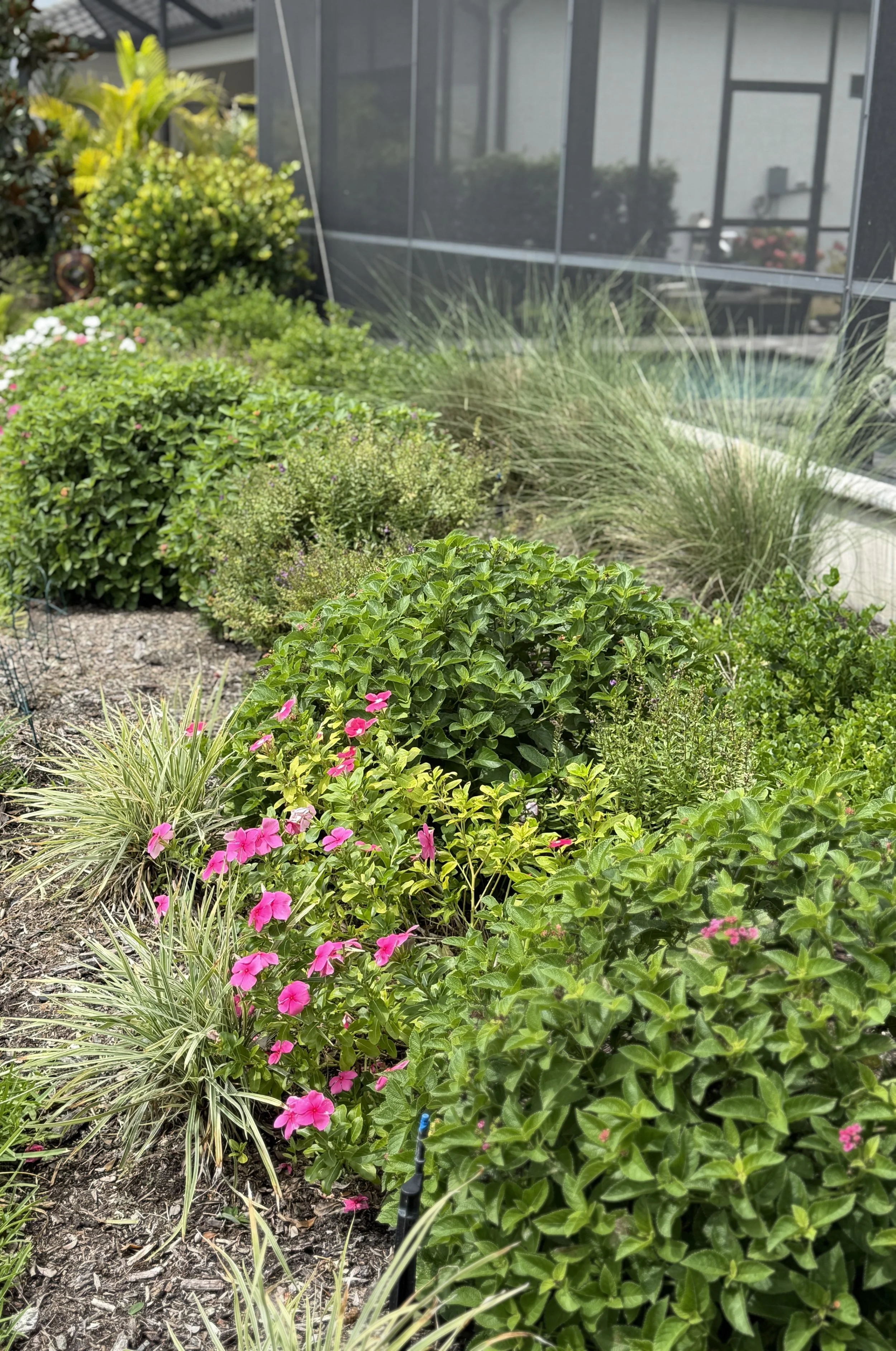
Why Beautiful Plants Don't Always Create Beautiful Landscapes
Have you ever walked through a garden center and thought, "I love every single one of these plants!"
Trust me—I get it. As plant lovers, we're naturally drawn to beautiful blooms, colorful foliage, and unique textures. Before you know it, your shopping cart is overflowing with plants you simply couldn't leave behind.
Then you get home, plant them all...and somehow your landscape doesn't look like the picture you had in your head. Sound familiar?
Here's why.
Beautiful plants don't automatically create beautiful gardens.
A beautiful landscape is about much more than the individual plants. It's about how those plants work together.
Great Design Is About Relationships
Think of your landscape like a great dinner party. If every guest is trying to be the loudest person in the room, it's exhausting.
But when everyone complements one another, the evening feels comfortable, balanced, and memorable. Plants work the same way. Some plants are meant to be the stars. Others play supporting roles.
Some provide structure. Others soften edges. Some add movement, while others simply create a backdrop that allows the focal points to shine. A successful landscape isn't built by individual plants.
It's built by the relationship between them.
Repetition Creates Calm
One of the biggest differences between a professionally designed landscape and one that feels scattered is repetition. When you repeat the same plants throughout your landscape, your eye naturally moves through the space.
The design feels intentional.
It feels peaceful.
Many homeowners believe they need dozens of different plants to create interest. In reality, fewer varieties often create a stronger impact. Instead of buying one of everything, consider planting groups of the same plant throughout the landscape.
Repetition creates rhythm—and rhythm creates beauty.
Too Many Colors Can Create Chaos
Color is wonderful. But more isn't always better.
If every plant is blooming in a different color or every shrub has dramatic foliage, your eye doesn't know where to look.
Instead of feeling exciting, the landscape can begin to feel busy. A more effective approach is to choose a limited color palette and repeat it throughout the garden.
When colors echo one another instead of competing, the entire landscape feels more cohesive.
Every Plant Shouldn't Be the Star
We've all fallen in love with a spectacular flowering plant. The problem comes when every plant in the landscape demands attention. Imagine watching a movie where every actor insists on being the main character. It wouldn't work.
Gardens need quiet moments just as much as dramatic ones. Use statement plants intentionally. Let them have room to shine.
Then surround them with supporting plants that enhance—not compete with—them.
Texture Is Often More Important Than Flowers
One of the biggest surprises for new gardeners is discovering that flowers aren't what make a landscape beautiful year-round.
Texture does.
Fine grasses, broad tropical leaves, glossy shrubs, airy perennials, and bold architectural plants all create interest long after flowers have faded. Some of my favorite gardens rely more on contrasting textures than nonstop blooms.
When you begin designing with texture first, your garden becomes beautiful in every season—not just when something is flowering.
Mature Size Matters
One of the most common mistakes I see is designing for today instead of three years from now. That tiny shrub won't stay tiny. That ornamental grass will spread. That tree will eventually cast shade over plants that once loved full sun.
Professional designers are always thinking ahead. They imagine what the garden will look like after the plants mature.
Giving plants enough room to grow doesn't just keep them healthier—it also preserves the beauty of the design.
Don't Be Afraid of Empty Space
Many homeowners feel like every inch of soil needs to be filled. It doesn't. Negative space is an important design element.
Just like a beautifully decorated room needs open wall space, gardens need breathing room.
Mulch isn't empty. A lawn isn't wasted space.
Open areas help frame your plants and allow the eye to rest before moving to the next feature.
Sometimes what you don't plant is just as important as what you do.
Structure Comes First
Flowers are the jewelry of the garden. Structure is the foundation.
Before I think about blooms, I think about the framework:
Trees
Large shrubs
Hedges
Evergreen plants
Grasses
Pathways
Focal points
These elements give the landscape shape and interest all year long. Flowers come and go. Strong structure remains.
Buy Fewer Varieties—and More of Each
This is one of the best pieces of landscape advice I can give. Instead of purchasing one of twenty different plants...
Choose five or six plants you truly love. Then repeat them throughout your landscape. Your garden will immediately feel more cohesive, polished, and professionally designed. You'll also simplify maintenance, make future additions easier, and create a stronger visual impact. Sometimes the hardest part of designing a beautiful garden isn't choosing what to plant.
It's choosing what to leave out.
Final Thoughts
As gardeners, it's easy to become collectors. There's always another plant to fall in love with. But the most memorable landscapes aren't the ones with the most plants.
They're the ones where every plant has a purpose and works together to create something greater than the individual pieces.
The next time you're tempted to buy one of everything at the garden center, pause for a moment.
Ask yourself:
"Does this plant fit the story my garden is trying to tell?"
Because in the end...
A beautiful garden isn't about collecting beautiful plants. It's about creating harmony between them.