Mealy Bugs: The Pest I Treat More Than Any Other
If I had to choose the one pest I help homeowners with more than any other, it would be mealy bugs.
They're relentless. They spread quickly. And if you don't stay ahead of them, they can completely cover a plant seemingly overnight.
The good news? They can be controlled—but consistency is everything.
Why They Keep Coming Back
One of the biggest mistakes I see homeowners make is planting large groups of the same susceptible plants together.
Think of it as putting out an all-you-can-eat buffet.
Some of the plants I see most commonly affected include:
Copperleaf
Crotons
Hibiscus
When one plant becomes infested, it's very easy for the insects to spread to the next one. Mixing plant varieties throughout your landscape helps reduce the risk of widespread infestations.
Prevention Is Easier Than Treatment
Healthy garden habits go a long way toward preventing serious outbreaks.
Some of the best things you can do include:
Give plants adequate spacing for good airflow.
Prune crowded growth to improve air circulation.
Regularly inspect your plants—not just the new growth, but stems, branch crotches, and all the way down to the base of the plant.
Pick up fallen leaves and other plant debris where pests can hide.
Catching an infestation early makes all the difference.
My Treatment Process
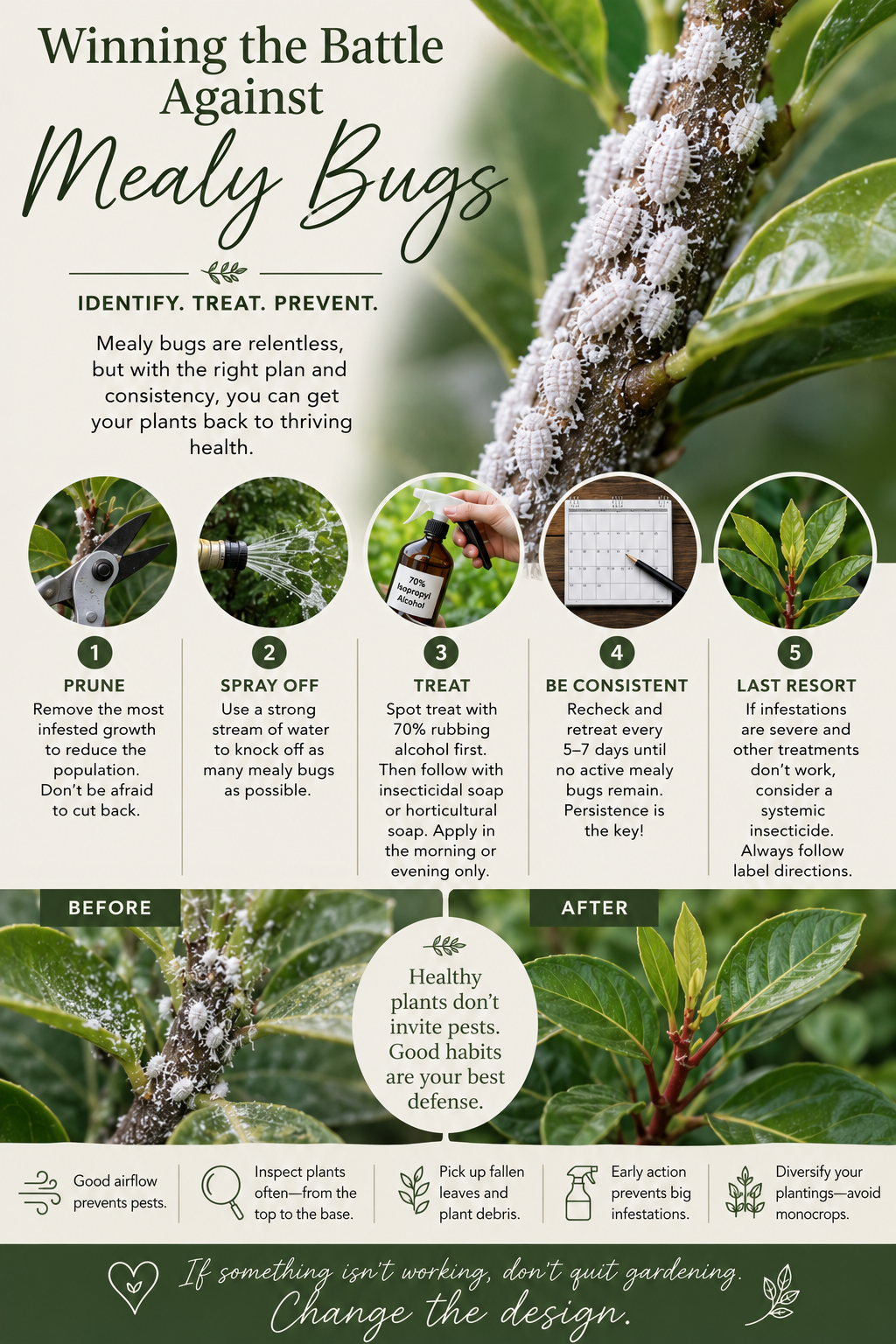
Step 1: Prune
Remove the worst infested branches first. Don't be afraid to cut plants back. Pruning removes thousands of insects immediately and makes the rest of the treatment much more effective.
Step 2: Spray Them Off
Before applying any products, use a strong stream of water to knock as many mealy bugs off the plant as possible.
This simple step reduces the population dramatically.
Step 3: Treat
For light infestations, I often start with 70% isopropyl (rubbing) alcohol.
Always spot test first to make sure the plant doesn't show damage.
Apply only during the early morning or evening—never during the heat of the day.
If additional treatment is needed, I rotate between products such as:
Insecticidal or horticultural soap
Step 4: Be Consistent
This is where most people give up.
One treatment is rarely enough.
Because new insects continue to hatch, I recommend inspecting and treating every 5–7 days until you no longer find active mealy bugs.
Persistence beats perfection.
Step 5: Systemic Insecticides
If the infestation is severe and repeated treatments haven't worked, a systemic insecticide may be necessary.
I consider this my last resort, especially around flowering plants, because systemics can affect pollinators if used improperly. Always follow the product label carefully.
Final Thoughts
Mealy bugs aren't impossible to eliminate—they just require patience and persistence.
The homeowners who are most successful are the ones who:
Catch infestations early.
Prune aggressively.
Improve airflow.
Diversify their plantings.
Stay consistent with treatment.
Remember, your goal isn't just to kill the bugs you see today—it's to break their life cycle so they don't come right back next week.