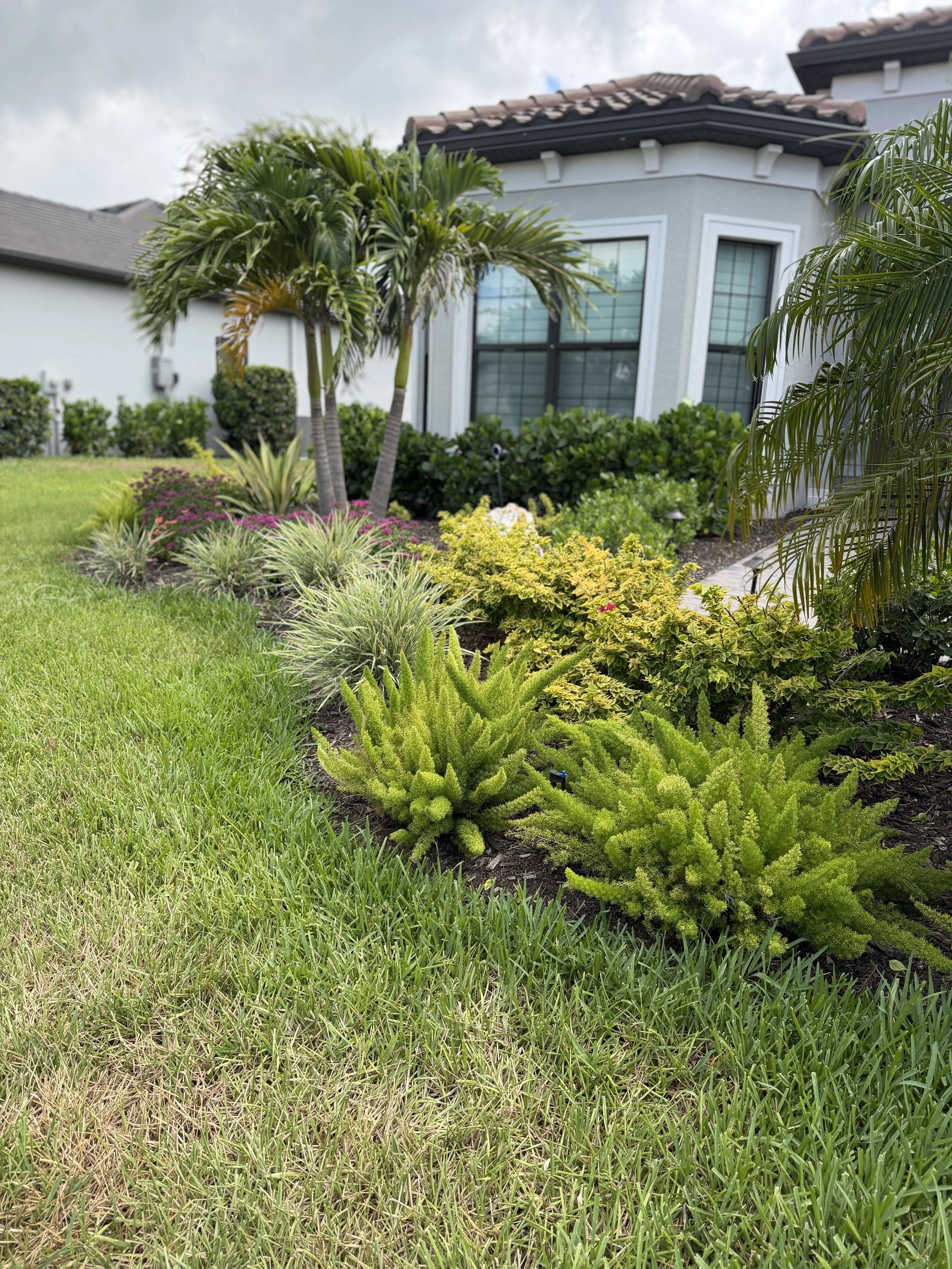
You Didn't Fail in Your Garden. Sometimes the Design Just Doesn't Work.
Have you ever stood in your garden, looked around, and thought, "I must not be very good at this?"
Maybe that flower bed never looked the way you imagined. Maybe the shrubs swallowed the walkway. Maybe your favorite plant isn't thriving where you put it. Or maybe you've spent hundreds of dollars on plants only to realize the whole area feels...off.
If that sounds familiar, I want to tell you something.
You didn't fail.
Sometimes the design simply isn't working.
As a landscape designer, I can tell you a little secret: my own garden is constantly changing. Plants get moved. Beds are redesigned. Color palettes evolve. Trees grow, shade changes, and plants mature differently than expected. That's not failure—it's gardening.
Every Great Garden Evolves
One of the biggest misconceptions I see is that beautiful gardens happen all at once. They don't. The gardens that make you stop and stare have almost always gone through years of editing, tweaking, removing, replacing, and refining. A garden isn't a finished project. It's a living space that changes with every season. The best gardeners aren't the ones who get everything right the first time.
They're the ones willing to make changes when something isn't working.
Even Professionals Move Plants
People are often surprised when they visit my garden and I tell them, "That plant used to be over there."
Or...
"I've redesigned this bed three different times."
Or...
"I loved this plant, but it just wasn't right for this spot."
That's normal. In fact, I expect it.
Sometimes I discover a plant grows much larger than I anticipated. Sometimes another plant steals the show, making its neighbor look out of place. Sometimes a color combination that looked beautiful on paper just doesn't create the feeling I wanted.
So I change it. There's no rule that says once a plant goes into the ground, it has to stay there forever.
Plants Change—and So Does Your Garden
When you first install a landscape, it's easy to think you've finished. In reality, you've just begun.
Over time:
Plants mature.
Trees create more shade.
Sun patterns shift.
Some plants thrive while others struggle.
Your maintenance preferences change.
Your style evolves.
The landscape that worked three years ago may not be the landscape that serves you today. That's okay. A well-designed garden grows with you.
Learn to Edit Instead of Starting Over
One of the most valuable skills you can develop as a gardener is learning to edit. Professional designers do it all the time.
Editing might mean:
Moving a plant to a better location.
Removing something that no longer fits.
Simplifying a bed with fewer plant varieties.
Repeating favorite plants instead of collecting new ones.
Adjusting spacing as plants mature.
Adding structure where a garden feels busy or chaotic.
Small changes often make a much bigger impact than starting from scratch.
Mistakes Are Some of Your Best Teachers
When I look back at my own garden, I can point to plenty of mistakes. I've planted things too close together. I've tried combinations that looked better in my imagination than they did in real life. I've fallen in love with plants that simply weren't the right choice for a particular space.
And every single one of those experiences made me a better designer. Gardening isn't about perfection. It's about observation.
Every season teaches you something if you're willing to pay attention.
My Garden Today Isn't the Same Garden I Started With
If you've followed me for a while, you've probably noticed that my garden doesn't stay the same. Beds have changed. Plants have been moved. Entire areas have been redesigned. Not because they failed—but because I learned something new.
As gardeners, we often think we should get it perfect the first time. I'd argue the opposite. The best gardens are created by people who are willing to keep learning, keep experimenting, and keep improving.
That's where the magic happens.
Give Yourself Permission to Change Your Mind
Maybe you've outgrown a certain style. Maybe you've discovered you prefer a simpler design. Maybe you've realized a particular plant requires more maintenance than you're willing to give. Changing your mind doesn't mean you made a mistake.
It means you've grown. Your garden should grow with you.
Final Thoughts
If there's one thing I hope you remember, it's this:
A garden is never finished.
It is always teaching, changing, surprising, and evolving.
So if something isn't working, don't be discouraged.
Take a step back.
Observe.
Learn from it.
Then make a change.
Because the most beautiful gardens aren't built by people who never make mistakes.
They're built by people who aren't afraid to keep editing.
If something isn't working, don't quit gardening. Change the design.