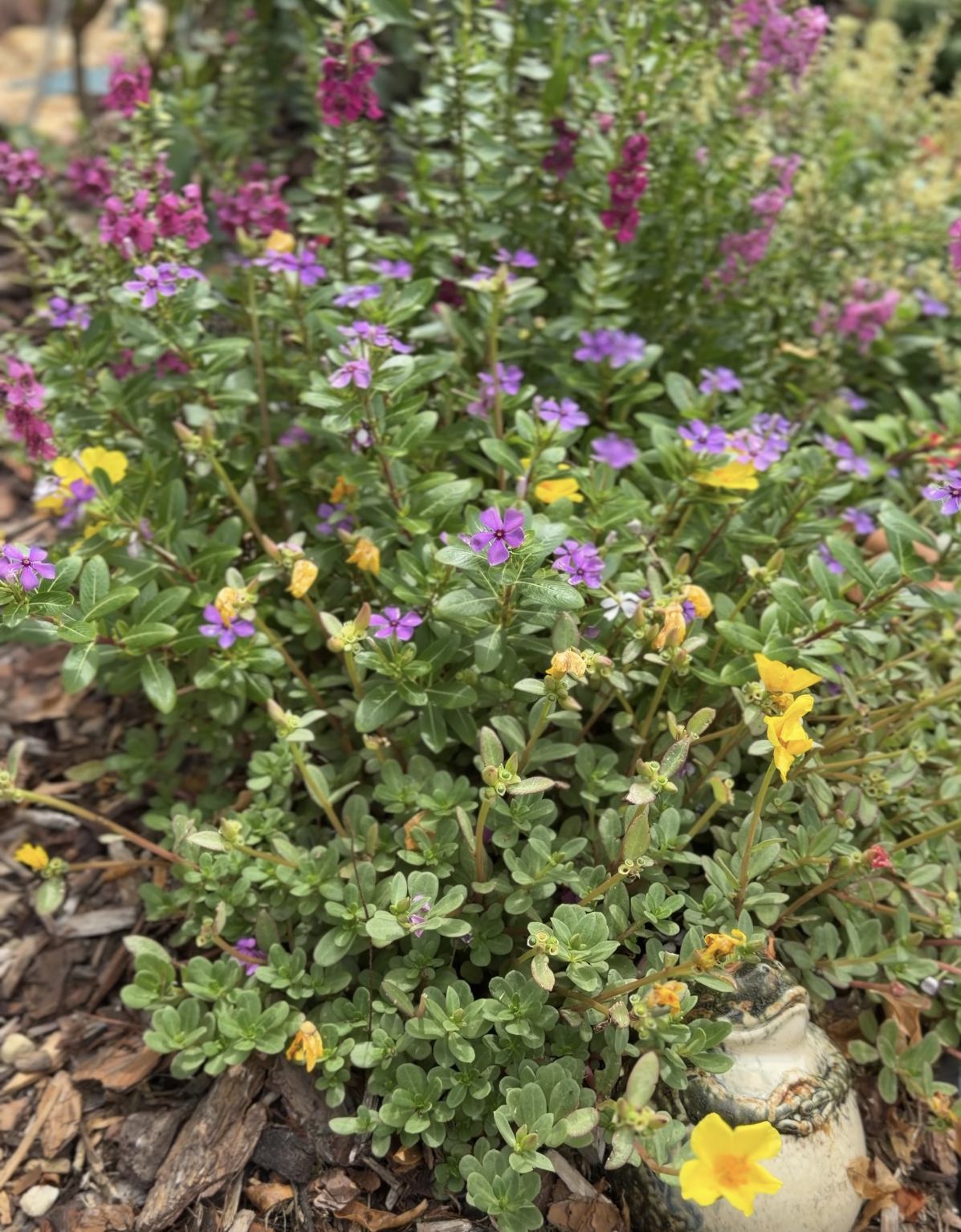
10 Plants That Are Thriving in My Florida Garden This Summer
If you've ever looked out at your garden in July or August and wondered if anything actually enjoys the Florida heat, you're not alone.
Summer is when our landscapes are put to the ultimate test. Between the relentless sun, high humidity, afternoon downpours, and temperatures that seem to climb by the day, many plants simply give up.
But not all of them.
One of the questions I'm asked most often is, "What's looking good in your garden right now?" So today, I thought I'd take you on a little tour of what's thriving in my own landscape during the hottest months of the year.
These are plants that are not only surviving—they're putting on a show.
1. Purslane (Portulaca spp.)
Sun
☀️ Full Sun
Why I Love It
If you need nonstop color during the hottest part of summer, purslane is hard to beat. Its cheerful blooms open in the sunshine and come in just about every color imaginable. I love using it in containers, hanging baskets, and along sunny borders where it spills beautifully over the edges.
Pollinator Value
Bees and other small pollinators frequently visit the flowers throughout the day.
Maintenance
Very low maintenance. Purslane loves heat, tolerates drought once established, and actually performs better if you don't overwater it.
Florida Zones
9–11
2. Angelonia (Angelonia angustifolia)
Sun
☀️ Full Sun
Why I Love It
Angelonia has become one of my favorite annuals for summer because it just keeps blooming. It provides upright color, doesn't mind the heat, and gives gardens that "freshly planted" look all season long.
Pollinator Value
Bees and butterflies regularly visit the flowers.
Maintenance
Remove spent flower spikes occasionally to encourage even more blooms, although many modern varieties are self-cleaning.
Florida Zones
9–11 (often grown as an annual)
3. Suntory Vinca (Catharanthus roseus)
Sun
☀️ Full Sun
Why I Love It
If you've followed me for a while, you've probably heard me recommend Suntory Vinca more than once. It handles Florida's heat and humidity exceptionally well and produces large flowers for months.
Pollinator Value
Occasionally visited by butterflies and bees.
Maintenance
Avoid overwatering and provide good drainage. Once established, it's incredibly easy to grow.
Florida Zones
9–11
4. Seaside Ageratum (Conoclinium spp.)
Sun
☀️ Full Sun to Part Sun
Why I Love It
This Florida native adds soft lavender-blue flowers when many other plants are slowing down. It's a wonderful choice if you're looking to create a more naturalistic, pollinator-friendly garden.
Pollinator Value
Excellent! Butterflies, native bees, and many beneficial insects love it.
Maintenance
Minimal. Cut back lightly if it becomes leggy.
Florida Zones
9–11
5. Starry Rosinflower (Silphium asteriscus)
Sun
☀️ Full Sun
Why I Love It
Starry Rosinflower brings bright yellow blooms and supports an incredible number of native pollinators. I appreciate that it's beautiful while also contributing to a healthier ecosystem.
Pollinator Value
Outstanding for native bees, butterflies, and other beneficial insects.
Maintenance
Very little once established. It tolerates Florida's summer conditions beautifully.
Florida Zones
8–10
6. Dipladenia (Mandevilla spp.)
Sun
☀️ Full Sun to Light Afternoon Shade
Why I Love It
Dipladenia provides continuous tropical color without requiring constant attention. I use it in containers, near entryways, or anywhere I want long-lasting blooms.
Pollinator Value
Attracts butterflies and hummingbirds.
Maintenance
Provide occasional fertilizer during the growing season and avoid consistently wet soil.
Florida Zones
9–11
7. Caladiums (Caladium spp.)
Sun
🌤 Shade to Morning Sun (depending on variety), can take full sun if irrigated.
Why I Love It
Who needs flowers when you have foliage this beautiful? Caladiums brighten shady spaces with incredible combinations of pink, white, red, and green.
Pollinator Value
While they aren't grown for pollinators, they provide beautiful texture and seasonal interest in shaded gardens.
Maintenance
Keep evenly watered during dry periods and remove damaged leaves as needed.
Florida Zones
9–11
8. Fiddlewood (Citharexylum spinosum)
Sun
☀️ Full Sun to Part Shade
Why I Love It
Fiddlewood is one of my favorite Florida-friendly shrubs or small trees. Its fragrant white flowers perfume the garden and it's incredibly reliable once established.
Pollinator Value
Excellent. The flowers attract bees, butterflies, and many other beneficial insects.
It's also a host plant for several butterfly species, making it even more valuable in wildlife gardens.
Maintenance
Occasional pruning to maintain shape is usually all it needs.
Florida Zones
9B–11
9. Gaura (Oenothera lindheimeri)
Sun
☀️ Full Sun
Why I Love It
Gaura adds movement to the garden like few other plants can. The delicate flowers seem to dance above the foliage every time the breeze blows, softening more structured plantings.
Pollinator Value
A favorite of bees and butterflies.
Maintenance
Trim lightly every so often to encourage fresh growth and continuous flowering.
Florida Zones
8–10
10. Blue Porterweed (Stachytarpheta jamaicensis)- native variety ONLY
Sun
☀️ Full Sun
Why I Love It
If I could recommend one pollinator plant that never seems to take a break, it would be Blue Porterweed. It blooms for months and provides nectar almost continuously.
Pollinator Value
Exceptional. Butterflies, native bees, skippers, and even hummingbirds regularly visit the flowers.
Maintenance
Very easy to grow. Cut back occasionally to encourage fresh growth and more blooms.
Florida Zones
9–11
A Few Things They All Have in Common
As I look around my garden this summer, I've noticed a pattern. The plants performing the best all share a few characteristics:
They love heat.
They tolerate Florida's humidity.
Most require very little supplemental water once established.
Many provide food and habitat for pollinators.
They offer long-lasting beauty without demanding constant maintenance.
That's exactly what I look for when designing landscapes for my clients.
A beautiful garden shouldn't require you to spend every weekend trying to keep plants alive.
It should work with Florida's climate—not against it.
Final Thoughts
Every garden is different, but one of the best things you can do is pay attention to what's thriving—not just in garden centers or on social media, but in real Florida gardens during the hottest months of the year.
Those plants have already proven themselves.
As we move closer to fall planting season, start making a list of the plants that impressed you this summer. They're often the best candidates to include in your next landscape project.
Sometimes the smartest way to build a beautiful garden is simply to let Florida tell you which plants belong there.