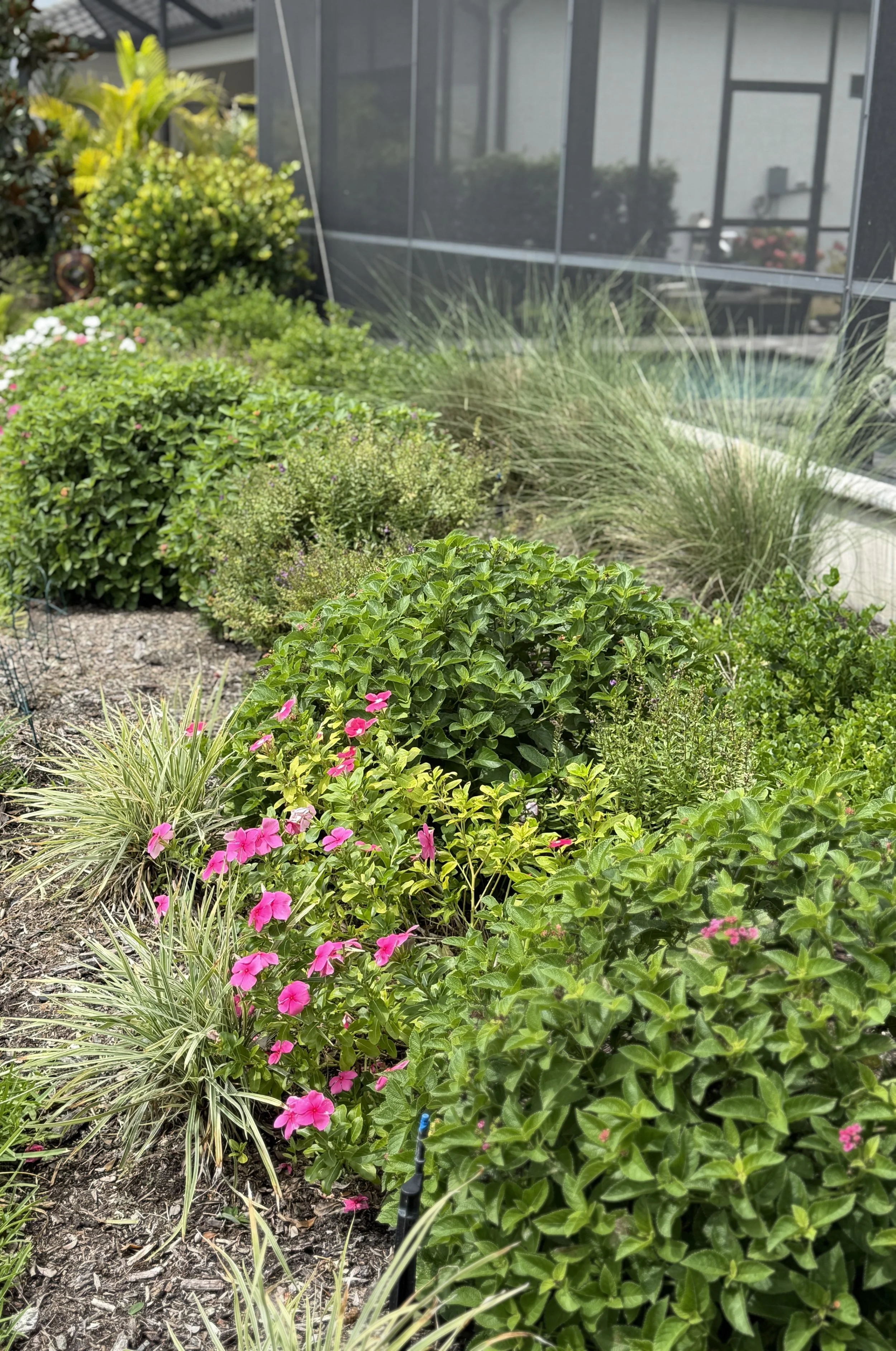
Wildlife-Friendly, Not Wild: Rethinking the Modern Landscape
There’s a shift happening in landscaping right now that I’m really excited about. We’re starting to move away from landscapes where everything is clipped, perfectly spaced and controlled. Instead, we’re seeing more grasses, native plants, groundcovers, layered plantings and plants that are actually allowed to grow into their natural form. Basically, landscapes are starting to look a little more like nature again, and from a wildlife perspective, that’s a really good thing.
But I also hear the pushback: “I like the idea of a more natural landscape, but I don’t want my yard to look wild.” I get it. Especially here in Florida, where so many of us live in HOA communities. Most homeowners still want their landscape to feel polished and cared for. They want butterflies and birds, but they also want curb appeal. The good news is those two things do not have to compete with each other.
The Problem Isn't Usually the Plants. It's the Design.
One of my favorite concepts around this comes from landscape ecologist Joan Iverson Nassauer. In her 1995 article Messy Ecosystems, Orderly Frames, Nassauer explored the idea that landscapes can support ecological function while still having recognizable signs that tell people, essentially, someone is taking care of this. She called these “cues to care.”
I think this is such an important concept for the direction landscaping is moving because sometimes what is good for wildlife doesn’t necessarily look “neat” by our traditional landscaping standards. A plant might be allowed to reach its natural size. Grasses might move and spill into one another. Flowers might be left standing after blooming. Groundcovers might spread, plants might be layered more densely and there might even be a few leaves underneath the shrubs.
None of those things mean the landscape is neglected. But without some kind of structure around them, they can sometimes look that way. That’s where good design comes in.
“Tidy Edges, Messy Middles”
Lisa Nunamaker of Paper Garden Workshop came up with a phrase I absolutely love for this: “Tidy Edges, Messy Middles.” It might be one of the easiest ways to understand how we can bring more naturalistic planting into our own yards.
The middle of the garden can be a little loose. Let the grasses move, let the groundcovers weave together and let plants touch each other. Let flowers come and go. Let a few seed heads stay. Let the garden actually look alive.
But give all of that a tidy edge. A clean bed line, defined walkway, maintained border, repeated grouping of plants or even a small area of neatly maintained lawn can completely change how we perceive the planting. Those elements tell our eye that everything happening inside that space is intentional.
Naturalistic Does NOT Mean Random
This is probably one of the biggest misconceptions I see. Creating a naturalistic landscape doesn’t mean going to the garden center, buying one of every native plant you can find and putting them wherever they’ll fit. You still need a plan. Actually, I would argue that good design becomes even more important when you’re creating a looser landscape.
There still needs to be repetition, structure and a focal point. We still need to consider mature size, create layers and leave some breathing room. Wildlife-friendly doesn’t have to mean wild-looking. The plants can be loose and natural while the overall design remains very intentional.
Start With Structure
If you’ve followed me for any amount of time, you’ve probably heard me say this before: structure before color. Before I start thinking about all the pretty flowers, I’m thinking about what is going to hold the landscape together. Trees, shrubs, grasses, strong foliage and groundcovers are what give the garden its bones. Then we can weave flowering and pollinator plants through that structure.
This is also why I don’t think every plant in a wildlife-friendly landscape has to be native. I love using native plants, but I also use Florida-Friendly plants when they’re appropriate for the site and the design. The goal is to build a landscape that works as a whole while also providing more resources for wildlife.
Repeat. Repeat. Repeat.
Repetition is another really simple way to make a naturalistic landscape look intentional. Instead of one muhly grass, one coontie, one coreopsis, one porterweed and one random plant you fell in love with at the nursery, repeat plants. Plant several muhly grasses together. Repeat that same groundcover somewhere else. Use the same shrub in several areas and carry some of the same plants throughout the landscape.
You can still have diversity without having one of everything. Repetition gives the eye something familiar to follow, and that instantly makes a landscape feel more cohesive and designed.
Give Plants Room to Be Plants
This is a big one for me. If we’re going to move toward more natural-looking landscapes, we also have to get more comfortable with what plants actually look like. Not every shrub needs to be a ball, and not every plant needs to be kept three feet tall simply because that’s the height of the window.
We also shouldn’t choose a plant that wants to be ten feet wide and then spend the next ten years fighting with it to keep it four feet wide. Choose the right plant, put it in the right place, give it enough room and then let it develop its natural shape. That alone can make our landscapes softer and more natural without making them look unmaintained.
Leave a Little Breathing Room
Naturalistic doesn’t mean we need to fill every square inch of the yard. Negative space is still important. A walkway, an open area, a sweep of groundcover, a small section of lawn or even mulch between larger plant masses gives your eye somewhere to rest.
Those quieter spaces are also part of the design. They help separate the fuller, looser areas and make the entire landscape easier to understand visually. Sometimes the thing that makes a lush planting look intentional is simply giving it a little room around it.
Be Tidy Where It Counts
This is probably my favorite takeaway from the whole idea of “cues to care.” You don’t have to tidy everything. You just need to be strategic about where you do it. Keep the sidewalk clear, maintain your bed edges, keep the front entrance polished, remove obvious weeds, prune when plants actually need pruning and keep pathways defined.
Then maybe we can relax a little in the middle. Maybe we don’t have to remove every leaf that falls underneath a shrub. Maybe we leave some seed heads. Maybe we allow groundcovers to knit together. Maybe we don’t immediately cut something back because it has gotten a little bigger. Maybe the garden gets to look like a garden.
And Yes, You Can Do This in an HOA
I actually think this style of landscaping has a lot of potential for HOA communities because, again, it’s not necessarily about which plants you use. It’s about how you use them. A pollinator garden can still have a defined edge. Native plants can still be planted in intentional groups. Grasses can be repeated, and wildlife plants can be layered behind more structured shrubs.
A habitat garden doesn’t have to look like an abandoned field. When we’re thoughtful about those “cues to care,” we can create landscapes that feel familiar enough to fit into our neighborhoods while functioning very differently from the traditional landscape. That’s where I think we have a real opportunity to change what our residential landscapes can do without completely abandoning the aesthetic people are comfortable with.
Maybe We Need to Redefine What “Cared For” Looks Like
For a long time, we’ve been taught that a cared-for landscape is a very controlled landscape: perfect lawn, perfect edges, perfectly clipped shrubs and not a leaf in sight. But maybe there’s another version. Maybe a cared-for landscape can have clean edges and beautiful structure while also having movement, plants touching, butterflies moving through the garden, birds eating seeds, groundcovers spreading underneath shrubs and grasses swaying instead of being chopped into little balls.
Maybe flowers don’t have to bloom every single day of the year. Maybe our gardens are allowed to change with the seasons. Maybe we can start appreciating plants for their form, texture, habitat value and the life they bring into our landscapes instead of judging them only by how tidy they look.
“Tidy edges. Messy middles.”
I don’t think we have to choose between beautiful landscapes and landscapes that support wildlife, and I definitely don’t think we have to choose between “manicured” and “wild.” There is a really beautiful place somewhere in the middle, and that’s the landscape I’m interested in creating.
Intentional enough for us. Natural enough for them.