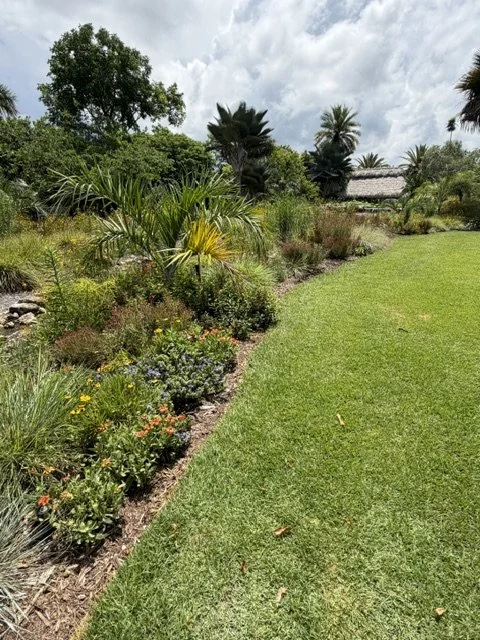
Before You Buy Another Flowering Plant, Read This
It happens all the time. You walk into a garden center, spot something covered in beautiful blooms, and immediately start imagining where you could put it in your landscape. I get it—I love flowers too. But here's something I wish more homeowners understood: beautiful flowers don't necessarily create a beautiful landscape.
If your landscape feels like something is missing, adding another flowering plant probably isn't going to fix it. The most beautiful landscapes aren't built around flowers alone. They're built around structure, form, texture, repetition, and foliage. Flowers are the finishing touch.
Start With the Bones of the Landscape
Think about your landscape when very little is blooming. Does it still look good? That's one of the questions I ask myself when I'm designing. Your trees, palms, shrubs, grasses, groundcovers, and other structural plants create the framework of the landscape. They establish height, shape, and layers and help guide your eye through the space.
A well-designed landscape should still be interesting even when there isn't a single flower blooming. That's where form and foliage become so important. A rounded shrub next to an upright grass creates contrast. A small tree adds height and draws your eye upward. Large tropical leaves paired with finer foliage create texture and interest without relying on flowers at all. Good design gives the landscape something to say before color ever enters the conversation.
Flowers Are Fleeting
One of the biggest mistakes I see homeowners make is shopping for their landscape based on what's blooming at the nursery that day. The problem is that bloom doesn't last forever. Some plants flower for weeks, others bloom in flushes throughout the year, and even our long-blooming Florida favorites have periods when they aren't putting on their best show.
Instead of choosing a plant solely for its flowers, I like to ask what that plant contributes when it isn't blooming. Does it have interesting foliage or an attractive shape? Does it provide structure? Does it offer food or habitat for wildlife? Does it fill an important layer in the landscape? If the answer is yes, the flowers become a bonus rather than the plant's entire reason for being there.
Build in Layers
A beautiful landscape should have depth. Rather than filling a bed with a collection of flowering plants, start by creating layers. You might begin with a small tree or larger focal plant, then add dependable shrubs for structure. Grasses and perennials can provide movement and seasonal interest, while groundcovers finish the lower layer and visually connect everything together.
Once that foundation is in place, bring in flowering plants where they'll have the most impact. This approach creates a landscape that feels more intentional and polished, and it's especially helpful in HOA communities. Pollinator-friendly doesn't have to mean messy. You can incorporate nectar plants, butterfly host plants, berries for birds, and shelter for wildlife while still using repetition, defined beds, and strong structure to create a landscape that looks maintained and purposeful.
Stop Buying One of Everything
This one can be difficult for plant lovers because there are so many beautiful choices, but you don't need one of everything. When every plant in a bed is different, your eye doesn't know where to land. Instead of looking lush and interesting, the landscape can start to feel busy and disconnected.
Repetition creates calm and helps tie a landscape together. Repeating the same shrub, grass, groundcover, or flowering perennial throughout the design creates continuity while still allowing plenty of variety. Sometimes three plant varieties repeated thoughtfully can have far more impact than ten different plants competing for attention.
Choose Plants for the Long Haul
Before buying a plant because it's covered in flowers, look beyond what it looks like today. Consider its mature height and width, how much pruning it will require, and whether it actually likes the amount of sun, moisture, and soil conditions you have. A plant that looks perfect in a one-gallon nursery pot can become a maintenance problem when it's placed in a space that's far too small for its mature size.
I also like to think about the job a plant will have in the landscape. Maybe it's providing privacy or creating structure. Maybe it's a butterfly host plant, produces berries for birds, creates a lower layer beneath shrubs, or provides seasonal color. Not every plant has to do everything, but every plant should have a reason for being there.
Color Comes Last
When I design a landscape, color isn't where I start. I think about structure, form, scale, layers, texture, and repetition first. Then I think about color. When those foundational pieces are right, you don't need flowers everywhere to make a landscape beautiful.
In fact, flowers often have more impact when they're surrounded by quieter foliage. A sweep of pink muhly grass becomes more dramatic when the plants around it allow it to shine. A grouping of pentas stands out when it isn't competing with ten other flowering plants. A beautiful flowering tree becomes a true focal point when the rest of the landscape gives your eye somewhere to rest.
Before Your Next Nursery Trip...
Instead of walking into the garden center asking, “What pretty plant can I add?”, take a look at your landscape first and ask, “What's missing from the design?” Maybe it's height, structure, repetition, texture, or a groundcover that connects everything together. And yes, sometimes what you're missing really is a beautiful flowering plant—but now you're choosing it because it belongs in the landscape, not simply because it looked pretty at the nursery.
Beautiful plants are wonderful. Thoughtful design is what turns those beautiful plants into a beautiful landscape.