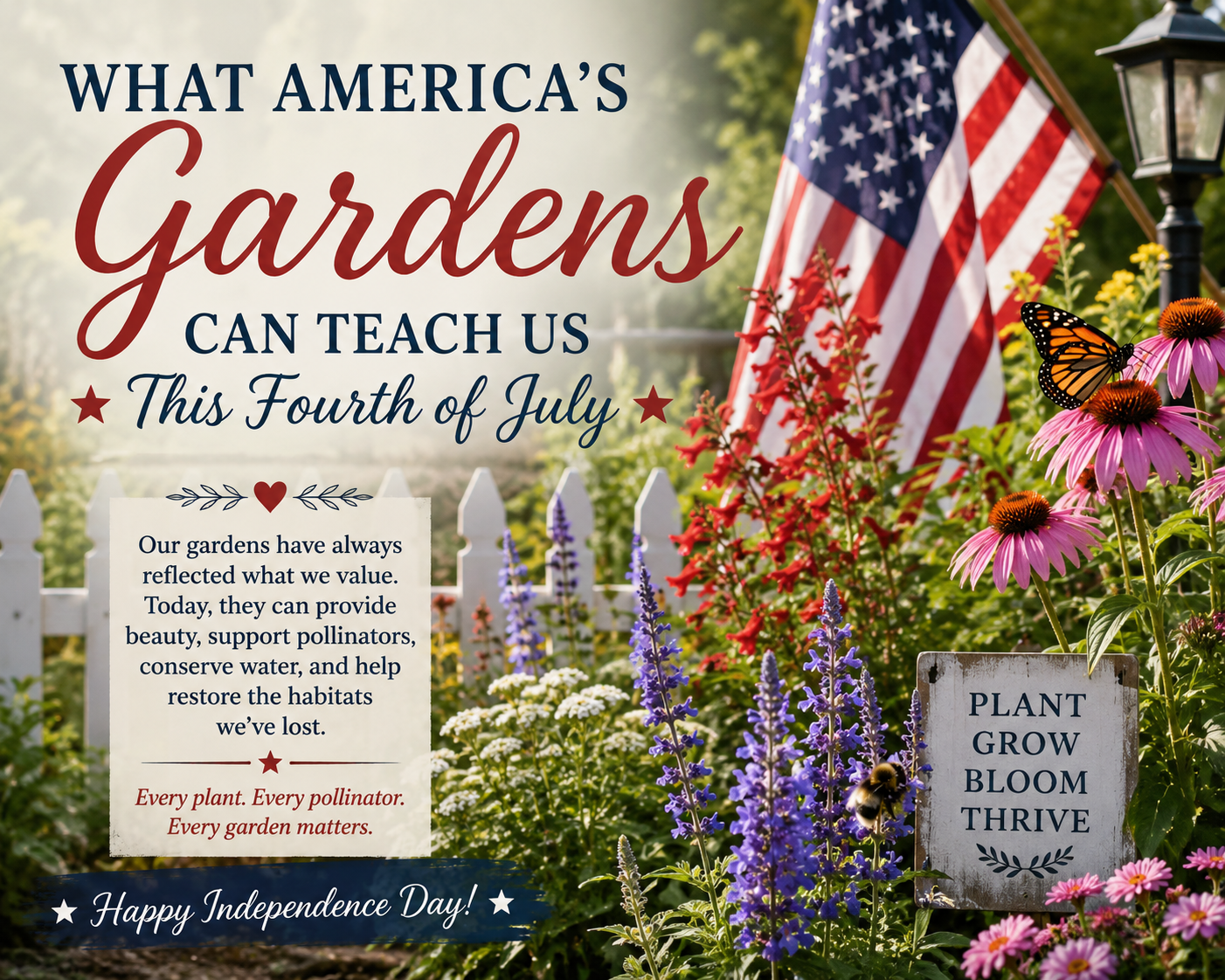
What America's Gardens Can Teach Us This Fourth of July
As we celebrate Independence Day with backyard barbecues, fireworks, and time spent with family and friends, I've been thinking about something a little different this year.
Gardens.
Specifically, the role gardens have played throughout American history.
Gardening has been part of the American story since the very beginning.
Long before garden centers, irrigation systems, and social media gardening groups, early Americans relied on their gardens for survival. Colonial gardens weren't planted simply because they were beautiful. They provided food, medicine, herbs, and materials needed for everyday life.
Some of our Founding Fathers were passionate gardeners.
Thomas Jefferson spent years experimenting with plants at Monticello. George Washington carefully designed and managed the gardens at Mount Vernon. For many early Americans, gardening wasn't just a hobby—it was a way of life.
As our country grew, so did our gardens.
Victorian gardens became filled with flowers and ornamental plants. Victory Gardens during World War I and World War II helped families grow food during difficult times. Community gardens brought neighbors together. Backyard gardens became places to gather, celebrate, and connect with nature.
While the styles have changed over the years, one thing has remained the same.
Gardens have always reflected what we value.
Today, I believe our gardens have an opportunity to tell a new story.
For many years, landscaping was often focused solely on appearance. Perfect lawns, neatly clipped shrubs, and colorful flowers were the goal. There's certainly nothing wrong with wanting a beautiful landscape. I love beautiful gardens as much as anyone.
But I think today's gardens can do even more.
They can provide food for pollinators.
They can provide shelter for wildlife.
They can conserve water.
They can help restore a small piece of the habitat we've lost through development.
And they can still be beautiful.
One of the things I love most about Florida gardening is that we have the opportunity to create landscapes that are both attractive and beneficial. A flowering shrub can feed butterflies. A native tree can provide shelter for birds. A patch of sunshine mimosa can support pollinators while reducing the need for mowing.
Every plant has a purpose.
Some provide nectar.
Some provide food.
Some provide shelter.
And some are simply beautiful.
The best landscapes often do all four.
As we celebrate our nation's independence this week, I think it's worth remembering that gardens have always been part of the American story. They connect us to the land, to history, to our communities, and to the natural world around us.
Whether your garden is a sprawling landscape, a few containers on a patio, or a small pollinator bed by the mailbox, it matters.
Every flower planted for a pollinator matters.
Every native shrub matters.
Every tree matters.
And every gardener who chooses to create a little more habitat is helping write the next chapter of America's gardening story.
So this Fourth of July, as you enjoy time outdoors with family and friends, take a moment to appreciate your garden.
Notice the butterflies.
Listen for the birds.
Watch the bees moving from flower to flower.
And remember that gardening, much like America itself, is always a work in progress.
Happy Independence Day, and happy gardening.