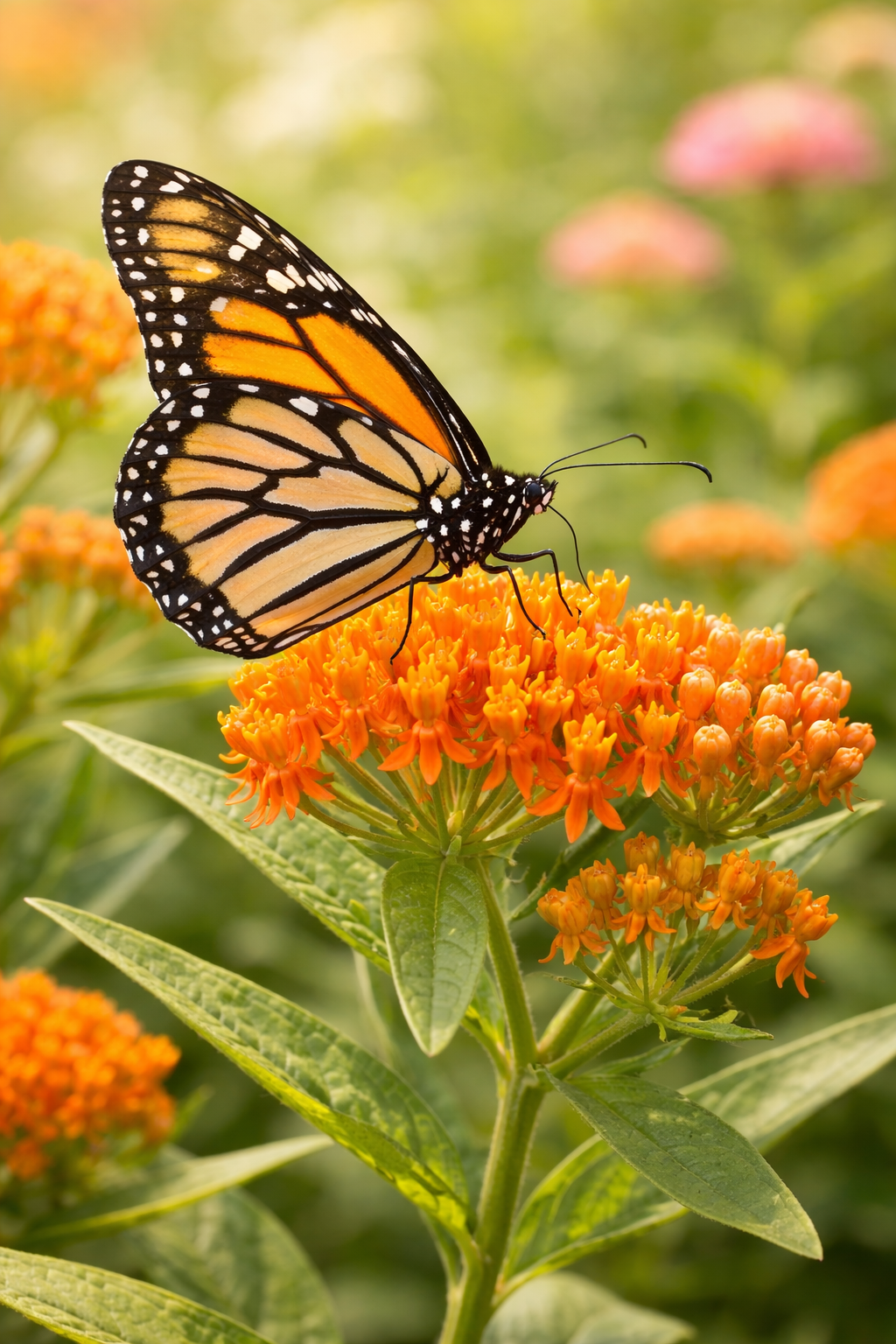
Unpopular Opinion: You Don’t Have to Go 100% Native to Support Wildlife
I’m going to say something that might ruffle a few feathers—especially in the gardening world:
You do not have to plant a 100% native landscape to support wildlife.
Now, before anyone jumps in, let me be clear. I believe in native plants. I use them often. I recommend them whenever it makes sense. There is no denying that we are losing natural habitats and that native plants play a critical role in supporting the ecosystems that depend on them.
But somewhere along the way, the conversation shifted from encouraging native planting… to demanding it.
And that’s where I start to take issue.
Because real life is rarely all-or-nothing.
You wouldn’t take someone who has eaten fast food their entire life and tell them that starting tomorrow they can only eat broccoli. It’s unrealistic, overwhelming, and more than anything—it’s discouraging. Most people would shut down before they even begin.
The same thing is happening in landscaping.
We are asking homeowners to completely rethink everything they know, remove established landscapes, and replace them with something entirely new. While that might sound ideal on paper, it’s not always feasible. Landscapes take years to build. They represent time, money, and often a sense of pride. Transitioning to a more native approach is a process, not an overnight decision.
And yet, I’ve seen people get excited about planting—really excited—only to be told they’ve done it “wrong.”
They go to the nursery, they pick out plants they love, maybe they even notice butterflies visiting their yard for the first time. They’re proud of what they’ve created. And then someone comes along and tells them those plants aren’t native and shouldn’t be there at all.
I’ve had this happen to friends of mine.
And I’ll say it plainly: I think that mindset does more harm than good.
Because any green space is better than no green space.
A yard filled with plants—even if they aren’t all native—is still providing something. It’s offering shelter, food sources, and a break from the endless stretch of concrete and turf grass that dominates so many neighborhoods. A garden that isn’t dependent on constant pesticides and heavy fertilizer is already a step in the right direction.
Progress should count for something.
When we create rigid rules around what is “acceptable,” we risk pushing people away entirely. Not everyone starts their gardening journey with a deep understanding of ecology, and they shouldn’t have to. Most people start simply because they want something beautiful. They want flowers. They want birds. They want butterflies.
That curiosity—that desire—is the doorway.
And if we meet people there, instead of correcting them, we have an opportunity to guide them. To introduce native plants gradually. To explain why they matter. To help them make better choices over time.
Because that’s how learning actually works.
None of us started out knowing everything. We all learned through experience, through mistakes, through trying something and adjusting when it didn’t work. And as we learn, we do better. We refine. We grow.
Gardening is no different.
I would much rather see someone plant a mix of native and Florida-friendly plants and feel encouraged to keep going than to see them give up entirely because they felt judged or overwhelmed.
At the end of the day, the goal isn’t perfection. It’s participation.
If more people are planting, more people are creating habitat, more people are reducing chemical use and paying attention to the natural world around them—that’s a win.
So yes, plant natives when you can. Add them in where it makes sense. Learn about them. Appreciate them.
But don’t let the idea that it has to be all or nothing stop you—or anyone else—from getting started.
Because the truth is, a garden doesn’t have to be perfect to make a difference.
It just has to exist.