Top 5 Shrubs for a Florida Landscape (Zone 10A–11)
Wildlife-Friendly, Drought-Tolerant & Easy to Care For
One of the biggest mistakes I see in Florida landscaping is choosing plants that constantly struggle in our heat, humidity, sandy soil, and periods of drought. The good news? There are plenty of beautiful shrubs and structural plants that thrive in Florida while also supporting pollinators, birds, and wildlife.
If you’re looking for plants that are low-maintenance, resilient, and well-suited for zones 10A–11, these are five of my favorite go-to plants for Florida landscapes.
1. Silver Buttonwood
(Conocarpus erectus var. sericeus)
Silver Buttonwood is one of the best structural plants for coastal and inland Florida landscapes. Its soft silver foliage adds contrast and brightness while tolerating heat, drought, salt, and wind like a champion.
Why I love it:
Extremely drought and salt tolerant
Beautiful silver foliage adds texture and contrast
Works as a hedge, accent shrub, or small tree
Provides shelter for birds and wildlife
Best Uses:
Coastal landscapes
Modern or tropical designs
Privacy hedges
Focal points or accents
👉 Bonus: The silver foliage pairs beautifully with colorful flowering plants and grasses.
2. Dombeya ‘Seminole’
(Dombeya x seminole)
If you love hydrangeas but garden in South Florida, Dombeya ‘Seminole’ is the tropical alternative you didn’t know you needed. This large flowering shrub produces huge clusters of pink blooms during cooler months and becomes a pollinator magnet.
Why I love it:
Massive blooms with a tropical look
Attracts bees and pollinators
Handles Florida heat far better than hydrangeas
Creates a lush, cottage-garden feel
Best Uses:
Focal shrub
Pollinator gardens
Tropical landscapes
Backdrops for layered planting beds
👉 Bonus: Blooms often appear when many other plants are slowing down.
3. Coontie
(Zamia integrifolia)
Coontie is one of Florida’s best native plants and one of the easiest plants you can grow. This cycad gives a clean, structured look while supporting native wildlife—especially the Atala butterfly.
Why I love it:
Florida native
Extremely drought tolerant once established
Low-maintenance and tidy
Host plant for the rare Atala butterfly
Best Uses:
Foundation plantings
Borders and mass plantings
Tropical or native gardens
HOA-friendly landscapes
👉 Bonus: Coontie handles both sun and shade, making it incredibly versatile.
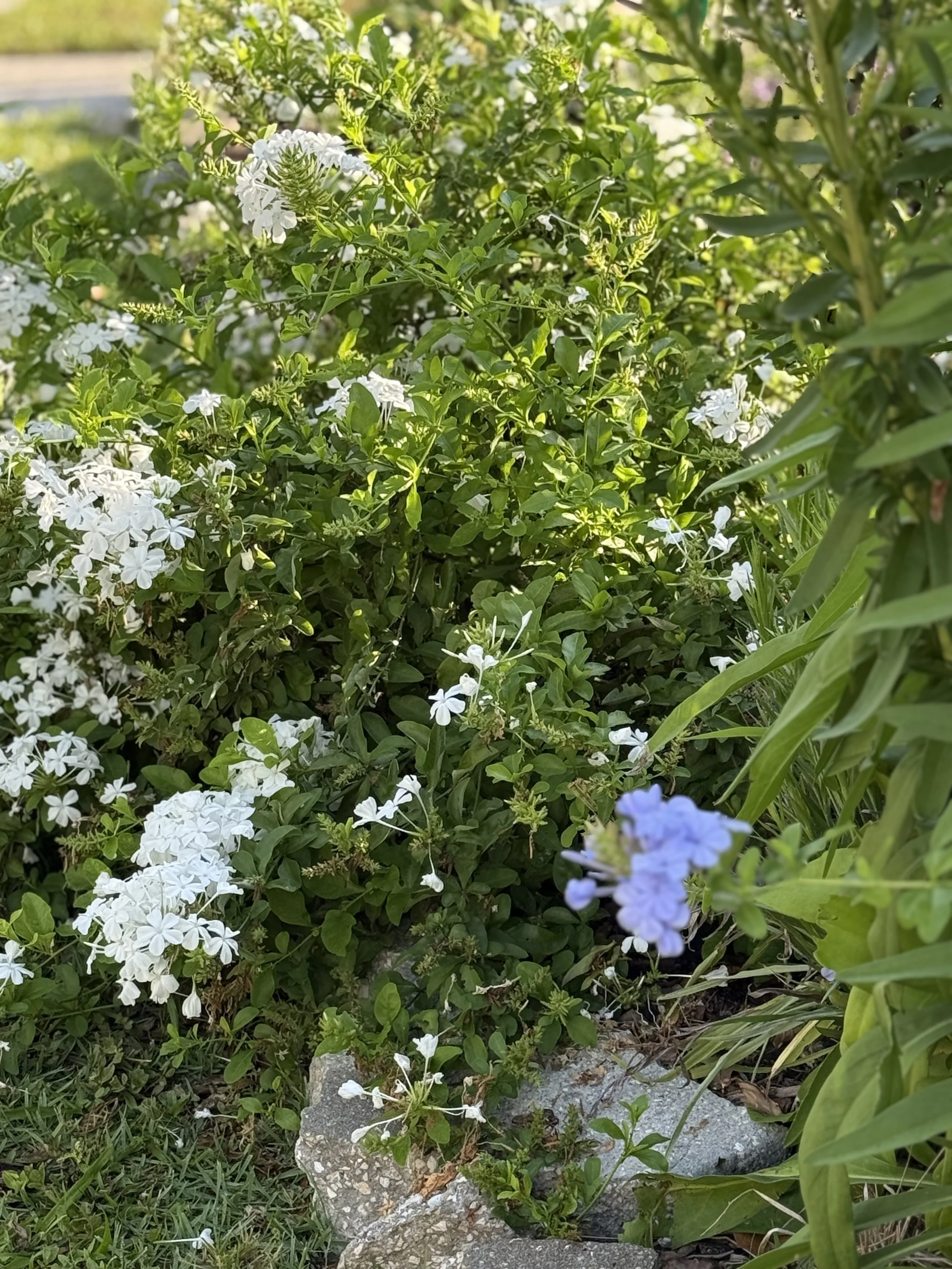
4. Blue & White Plumbago
(Plumbago auriculata)
Plumbago is one of the easiest flowering shrubs for Florida landscapes. Whether you choose the classic blue or white variety, these shrubs provide nearly nonstop color while attracting butterflies and pollinators.
Why I love it:
Long blooming season
Heat and drought tolerant
Soft, flowing habit adds movement
Loved by butterflies
Best Uses:
Informal hedges
Pollinator gardens
Softening hardscape edges
Cottage-style landscapes
👉 Bonus: Plumbago thrives in Florida summers when many flowering plants struggle.
5. Simpson’s Stopper
(Myrcianthes fragrans)
If I had to recommend one Florida native shrub that works almost anywhere, Simpson’s Stopper would be high on the list. It’s clean, evergreen, wildlife-friendly, and adaptable to many landscape styles.
Why I love it:
Native Florida shrub
White flowers attract pollinators
Orange-red berries feed birds
Dense growth makes an excellent hedge
Best Uses:
Privacy hedges
Native landscapes
Foundation plantings
Formal or natural designs
👉 Bonus: The exfoliating bark adds beautiful texture and interest year-round.
Final Thoughts
A successful Florida landscape starts with choosing plants that actually want to grow here. These plants don’t just survive Florida’s climate—they thrive in it while supporting birds, butterflies, bees, and other wildlife.
The best part? Once established, they require far less water, fertilizer, and maintenance than many traditional landscape shrubs.
Beautiful landscapes and ecological benefits can absolutely go hand in hand.
And remember… always keep growing. 🌿