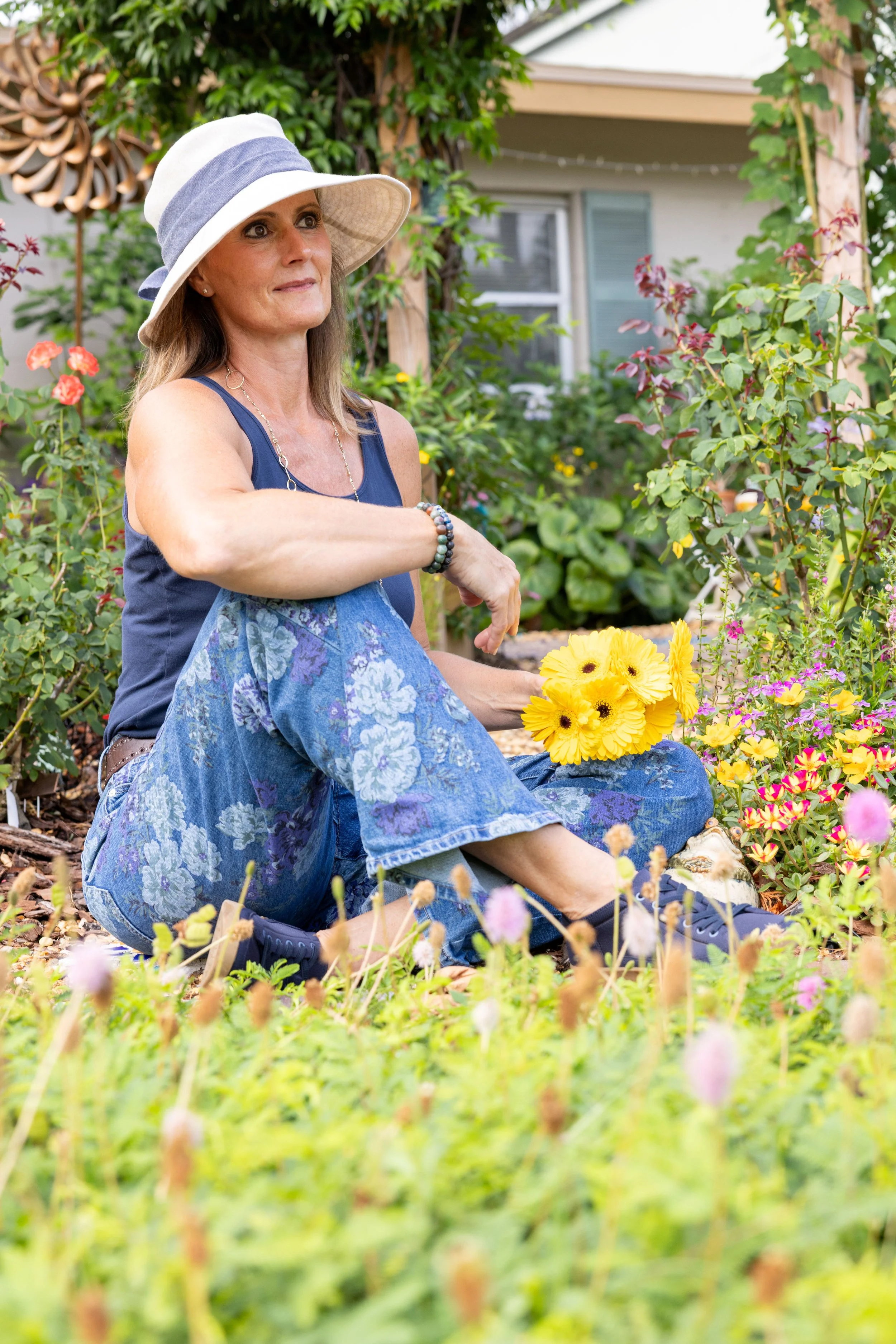
Saving Pollinators One Landscape at a Time
Why I Do What I Do
People often ask me why I'm so passionate about pollinators and wildlife-friendly landscaping. After all, there are plenty of beautiful plants to choose from, so why do I spend so much time talking about butterflies, bees, host plants, and native shrubs?
The answer is actually pretty simple.
I love beautiful landscapes, but I also believe our landscapes can do more than just look pretty.
There is no denying that Florida is changing. Everywhere you look, open land is becoming neighborhoods, roads, shopping centers, and parking lots. The reality is that native habitat is disappearing at a rapid rate, and with it, many of the food sources and shelter that wildlife depend on.
Can you or I stop development? Probably not.
The truth is, the train has already left the station. Florida is growing, and that's not likely to change anytime soon.
But that doesn't mean we can't make a difference.
One of my favorite stories is about a man walking along a beach after a storm. Thousands of starfish had washed ashore and were stranded in the sand. As he walked, he bent down, picked up a starfish, and threw it back into the ocean.
Someone watching asked him, "Why are you doing that? There are thousands of starfish on this beach. You can't possibly make a difference."
The man picked up another starfish, tossed it into the water, and replied, "It made a difference to that one."
That story has always stuck with me because it's exactly how I feel about landscaping.
No single landscape is going to save every butterfly, bee, bird, or pollinator in Florida. My garden won't. Your garden won't. But what if a migrating monarch finds nectar in your yard when it desperately needs fuel? What if a native bee finds pollen on your property? What if a bird finds berries, shelter, or a safe place to nest because of a tree you planted?
To that butterfly, that bee, or that bird, it matters.
And when enough people make those small choices, those individual landscapes start to connect. One yard becomes ten. Ten become one hundred. Before long, entire neighborhoods can become pockets of habitat in places where habitat no longer exists.
That's why I believe every plant should have a purpose.
Some plants provide shelter. Some provide nectar. Some provide food. And yes, some are simply beautiful.
The goal isn't necessarily to fill your landscape with only native plants or turn your yard into a wild meadow. My goal has always been to create landscapes that people love while also supporting the wildlife around us.
I often tell my clients that I want plants to work hard. If a plant can provide beauty, food, shelter, and nectar, that's a win in my book.
A flowering tree can provide shade for a homeowner, nectar for pollinators, berries for birds, and beauty for the neighborhood. A native shrub can create privacy while serving as habitat. Even a few thoughtfully chosen plants can have a much bigger impact than most people realize.
The good news is that creating a wildlife-friendly landscape doesn't mean sacrificing curb appeal. I firmly believe we can have both. We can create landscapes that are beautiful, organized, HOA-friendly, and still provide meaningful benefits to pollinators and wildlife.
That's the heart behind what I do.
Every consultation, every design, every plant recommendation is rooted in the belief that our landscapes can be part of the solution. We may not be able to restore every acre of habitat that's been lost, but we can make better choices in the spaces we control.
One flowering shrub.
One host plant.
One tree.
One landscape at a time.
Because if it matters to that butterfly, that bee, or that bird, then it matters to me.
And that's why I do what I do.
Saving pollinators and wildlife one landscape at a time.