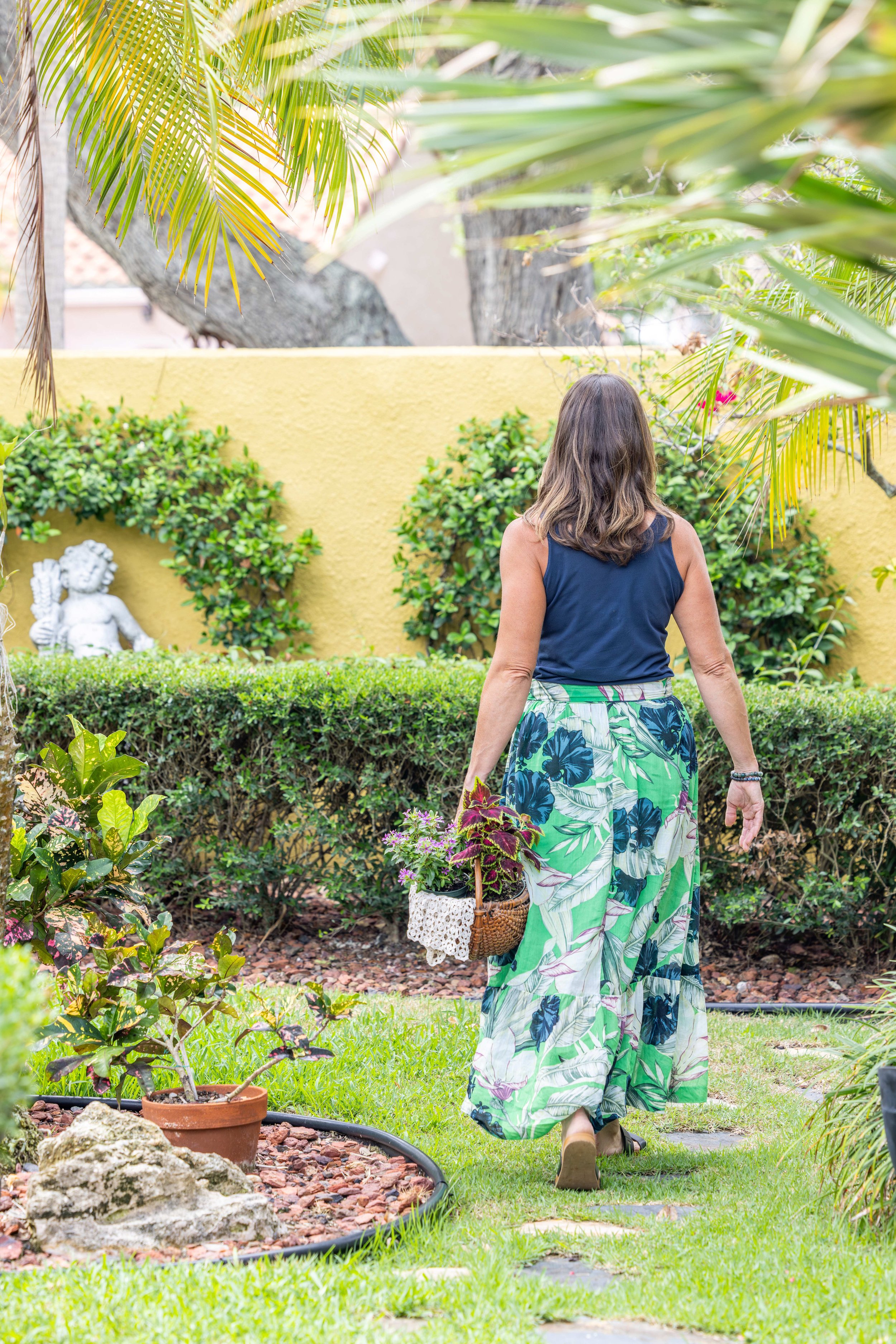
If I Could Start My Garden All Over Again, Here’s What I’d Do Differently
I've spent years creating, changing, planting, moving, removing, and replanting things in my own garden. And even though I'm a landscape designer, my garden is definitely not a collection of perfect decisions.
Actually, some of the best things I've learned about landscape design have come from seeing what didn't work in my own yard.
Gardens evolve, and so do we. What I wanted from my garden years ago isn't necessarily what I want from it today. I've learned what I'm willing to maintain, what starts to feel visually overwhelming, and which decisions I wish I had made from the very beginning.
So, if I could wipe the slate clean and start my Florida garden all over again, here's what I'd do differently.
1. I Would Plant Fewer Flowers and Create More Structure
This is probably the biggest one.
I love flowers. I love color. And, of course, I love attracting pollinators. So naturally, I planted a lot of flowering plants. But over time, I realized that more flowers don't necessarily make a better garden.
What I was missing was structure.
If I were starting again, I would begin with the bones of the garden—small trees, evergreen shrubs, grasses, groundcovers, and plants with interesting foliage and form. Then I would layer flowers into that framework rather than making them the framework.
Flowers come and go. They get tired. They need cutting back. Some disappear seasonally. But a well-placed shrub, ornamental grass, or beautiful foliage plant keeps the garden looking intentional even when very little is blooming.
I've actually started moving my own garden in this direction. I'm using fewer flowers and relying more on groundcovers, foliage, repetition, and structure. And I like the way the garden feels much more.
2. I Wouldn't Fall for a Trend and Plant Too Much of the Same Thing
I've definitely fallen into the trap of discovering a plant I love—or seeing one become popular—and then planting it everywhere. When something performs well and looks beautiful, it's really easy to think, Well, I need more of that.
And then suddenly you have a whole lot of one plant.
I still believe strongly in repetition. Repeating plants throughout a landscape is one of the best ways to create a cohesive, intentional design. But there's a difference between thoughtful repetition and allowing one type of plant to take over your entire garden.
Plant trends come and go, and I've learned that I don't need to jump on every one of them. More importantly, relying too heavily on a single plant can become a problem if pests, disease, weather, or changing conditions affect it. You can suddenly lose a big portion of the look you created.
If I were starting over, I'd still use repetition—but I'd create more diversity within it. I'd repeat colors, textures, shapes, and plant groupings instead of simply buying more and more of the same plant.
3. I Would Install Microirrigation From the Beginning
This is one of those things that's much easier to do before the garden is full.
If I could start over, I would have planned and installed microirrigation as part of the garden from day one instead of treating irrigation as something to figure out later.
Hand watering sounds manageable when you have a few plants. Then you add another bed. And another. And some containers. Then Florida hits you with a hot, dry stretch and suddenly you're dragging hoses all over the yard wondering how gardening became a part-time job.
Microirrigation also allows you to deliver water more intentionally to the plants that need it rather than watering everything the same way.
It's not the glamorous part of creating a garden, but good infrastructure can make maintaining that beautiful garden so much easier.
4. I Would Have Fewer Pots and Garden Ornaments
I love a pretty pot. I love finding something interesting for the garden. And that's exactly how you end up with a lot of pretty pots and interesting things.
One at a time, they don't seem like much. But eventually, all those containers and ornaments start competing with the garden itself.
I've learned that I prefer fewer, more intentional moments. Instead of having pots everywhere, I'd rather have a few larger containers placed where they really make an impact. The same goes for garden art and accessories.
Your eye needs somewhere to rest.
This is something I've been actively changing in my own garden—fewer things, stronger vignettes, and more emphasis on the plants and the overall design.
And there's another benefit to fewer pots: fewer things to water. That's a lesson you learn pretty quickly during a Florida summer.
5. I Would Plant Small Trees Much Earlier
If there's one thing I wish I could go back in time and plant, it's more small trees.
Trees take time, which is exactly why I wish I had planted them earlier. When you're first creating a garden, it's easy to focus on everything happening at eye level—the flowers, shrubs, and smaller plants that give you instant gratification.
But trees create something those plants can't.
They add height and scale. They create shade. They provide structure and help define garden spaces. They can provide flowers, berries, shelter, and habitat for wildlife. And as they mature, they completely change the feeling of a garden.
A small tree planted five years ago could be providing shade and structure today.
If you're just beginning your landscape, don't wait until everything else is finished to think about your trees. Plant the things that need time first.
The Garden I Want Now Is Different
Maybe that's the biggest lesson I've learned.
When I first started creating my garden, I wanted more. More flowers. More pots. More plants. More interesting things tucked into every available space.
Now I find myself wanting something different.
I want structure. I want repetition. I want plants to have room to reach their mature size. I want groundcovers doing more of the work. I want fewer pots and more intentional focal points. I want pollinator plants woven into a landscape that still feels calm and cohesive.
Basically, I don't want less of a garden. I want more intention in it.
And I don't regret the mistakes because they taught me how I actually want to garden. That's one of the best things about having a garden: nothing has to be permanent. You can move a plant. Remove something that no longer works. Simplify an area. Add the tree you wish you'd planted five years ago.
Your garden doesn't have to stay the same simply because that's how you started it.
If I could start my garden all over again, I wouldn't try to fit more into it. I'd give more thought to what I put in it—and give every plant, pot, and feature a reason to be there.