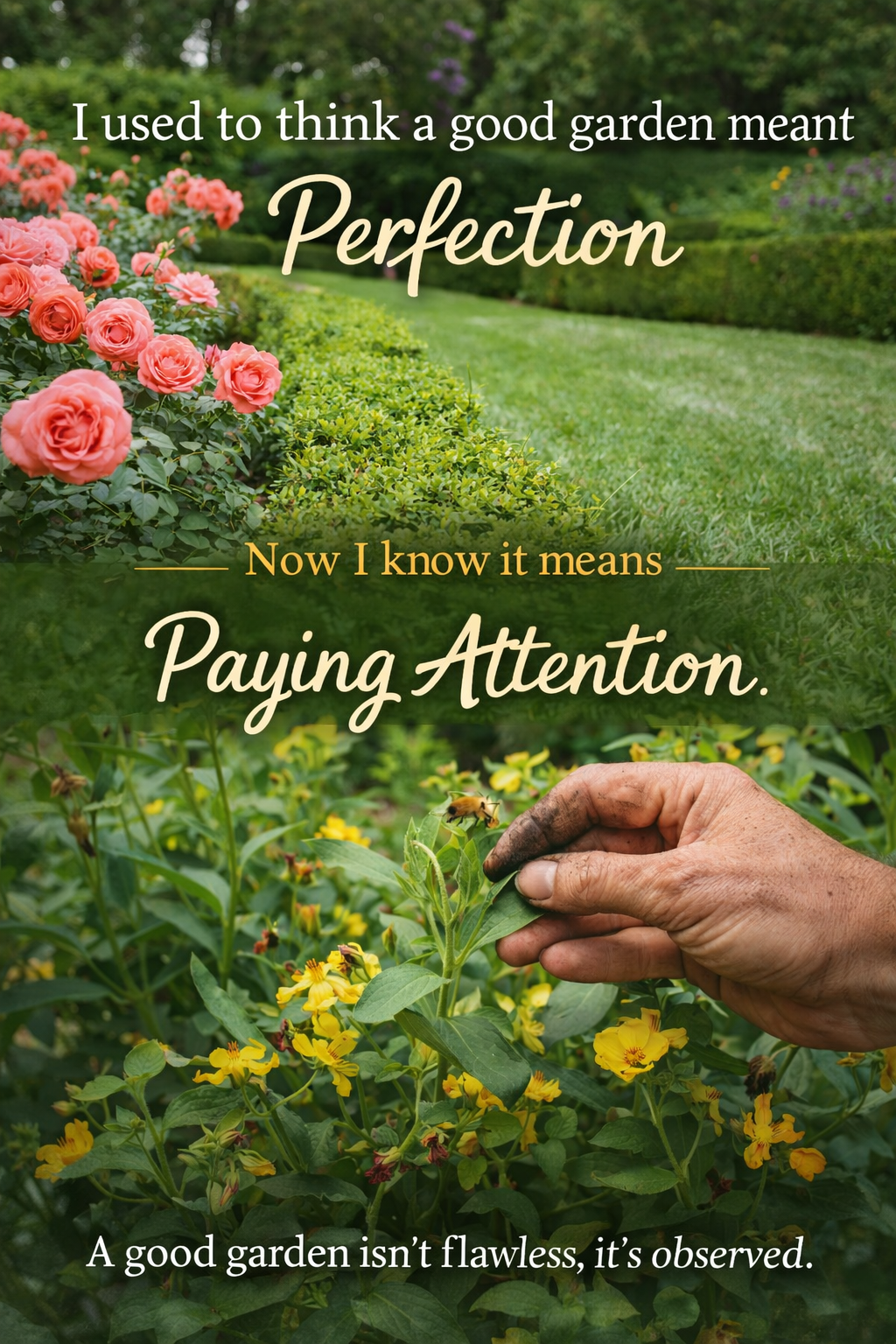
I Used to Think a Good Garden Meant Perfection. Now I Know It Means Paying Attention
I used to believe a good garden was a perfect one. No weeds. No gaps. Everything trimmed, blooming, and exactly where it was “supposed” to be.
But gardens have a way of teaching us—if we’re willing to pay attention.
Over time, I learned that perfection is not only unrealistic, it’s unnecessary. A good garden isn’t flawless. It’s observed.
Gardens Are Always Talking
Plants are constantly communicating. Leaves tell you when they’re stressed. Growth patterns reveal whether they have enough space. Blooms—or the lack of them—offer clues about light, soil, and timing.
A perfect garden ignores these conversations.
An attentive gardener listens.
Paying attention means noticing when something looks slightly off—before it becomes a problem. It means adjusting, not reacting. Responding with care instead of control.
Attention Creates Resilience
When you pay attention, your garden becomes more resilient. You catch pests early. You prune with intention. You allow plants to grow into themselves rather than forcing them into shapes they were never meant to be.
This kind of care doesn’t create magazine-perfect landscapes—it creates living, thriving ones.
Letting Go of Perfection
Perfection focuses on appearances.
Attention focuses on relationships.
It asks:
How is this plant doing here?
Does it belong in this space?
What does it need right now?
Gardens change. Seasons shift. Plants mature. Paying attention allows your garden to evolve instead of fighting it.
A Garden Is a Practice
A good garden isn’t something you achieve and check off a list. It’s something you return to, again and again. You observe. You adjust. You learn.
And in that process, the garden becomes healthier—and so do we.
I no longer strive for perfect gardens.
I strive for attentive ones.
Because what we pay attention to… grows.
Always keep growing. 🌿