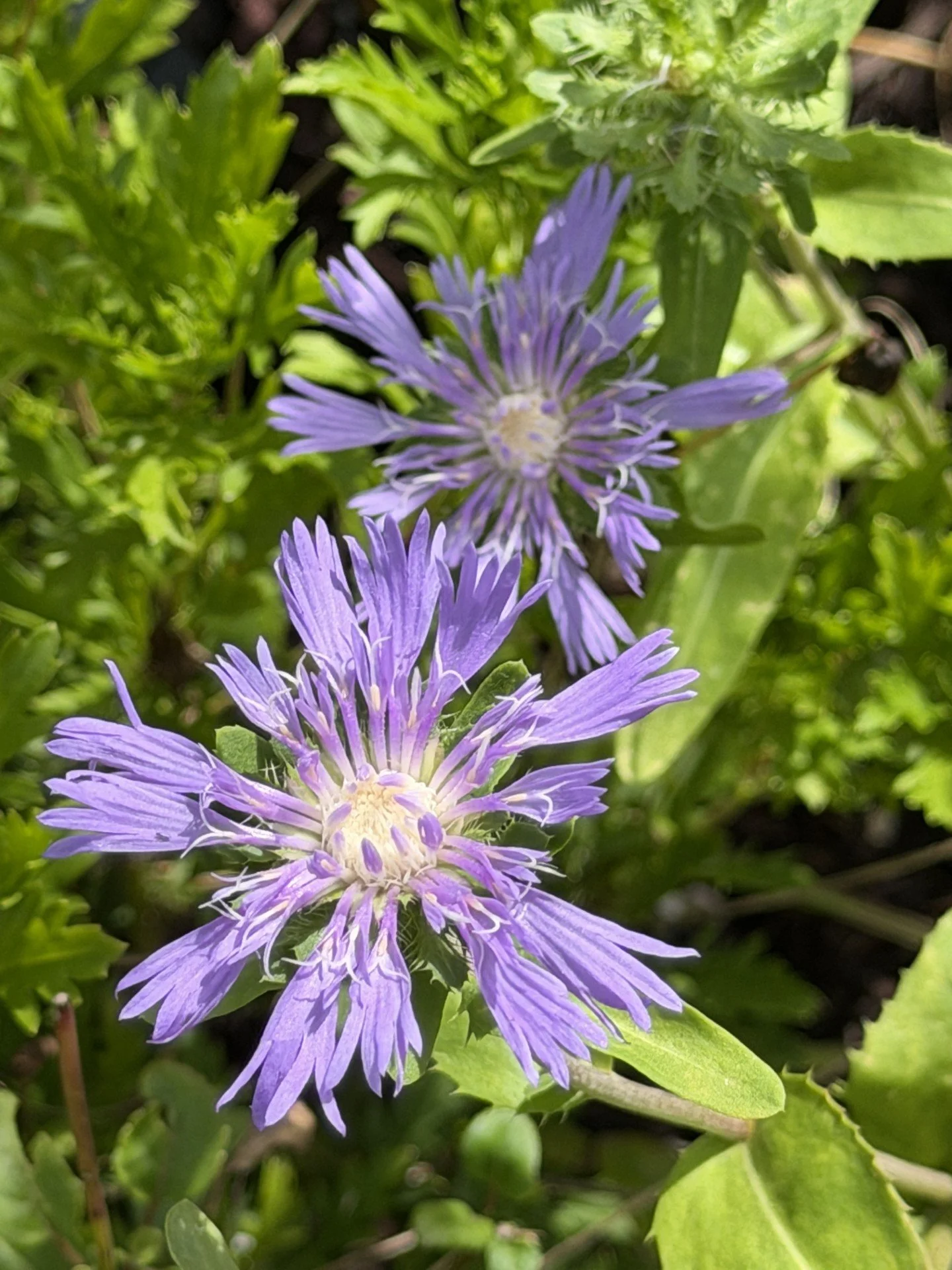
Sometimes the best plants aren't the flashiest. They're the ones that simply work.
Over the past couple of years, I've been making a conscious effort to incorporate more Florida native plants into my own garden and the landscapes I design for clients. And while supporting pollinators and wildlife has always been important to me, there's another reason behind this shift that might surprise you.
It's out of necessity.
After another long, brutally hot Florida summer, I've been paying close attention to which plants performed well, which ones struggled, and which ones needed constant attention. And you know what I've noticed? So many of my native plants just kept going.
They weren't necessarily the showiest plants in the garden. They weren't covered in flowers every single day. But they looked beautiful, they held their own, and most importantly, they worked.
They Took Everything Florida Summer Threw at Them
If you garden in Southwest Florida, you know our summers can be unforgiving. We deal with months of intense heat, humidity, periods of drought, and then seemingly endless rain. Sometimes we experience all of that within a matter of weeks.
This summer, I watched many of my established native plants handle those extremes remarkably well. They took the heat, the heavy downpours, and the stretches without rain. While other plants needed extra attention, many of my natives continued to look good without much intervention.
I've also noticed less pest damage on many of them, and some that the rabbits seem to leave alone. That's not to say native plants are immune to pests, diseases, or hungry wildlife. They're certainly not. But in my garden, the difference in how much attention some of these plants require has been noticeable.
And when you spend your days designing, installing, and caring for landscapes, you start to appreciate plants that don't constantly need something from you.
I've Fallen in Love With Their Texture and Natural Beauty
One of the biggest changes in my gardening style has been learning to appreciate plants for more than their flowers.
I used to focus heavily on blooms and adding color wherever I could. And don't get me wrong, I still love flowers! But these days, I'm finding just as much beauty in foliage, texture, movement, and the natural shapes of plants.
Many native plants have an understated beauty that I think is often overlooked. They aren't always flashy, and they don't necessarily bloom year-round, but they bring something else to the landscape.
The fine texture of native grasses, the glossy leaves of Simpson's stopper, the silvery foliage of buttonwood, and the way groundcovers weave their way through a garden all create interest without relying on constant flowers.
There's a rhythm to these plants when they're thoughtfully repeated throughout a landscape. Their textures and natural growth habits complement one another in a way that feels like nature, because that's exactly what we're drawing inspiration from.
And that's the kind of landscape I'm becoming more interested in creating. Something beautiful and intentional, but also relaxed, layered, and natural.
Less Work, Less Water, and More Enjoyment
One of my biggest goals as a landscape designer is to help homeowners create beautiful gardens that don't require constant maintenance.
I've always believed in choosing the right plant for the right place, but experimenting with more native plants has reinforced just how important that philosophy is.
Once established, many Florida natives are well adapted to our local conditions and can require less supplemental irrigation than plants that aren't suited to our climate. I've also found that many of the natives I'm growing need less pruning, fertilizing, and pest management.
Of course, native doesn't automatically mean drought-tolerant, maintenance-free, or suitable for every location. A plant native to a wetland isn't necessarily going to thrive in a hot, dry landscape bed. We still have to choose plants based on their individual needs.
But when the right native plants are placed in the right conditions, they can make gardening so much easier.
And after years of watching homeowners struggle to keep plants alive through our Florida summers, I think that's something worth paying attention to.
The Wildlife Is an Added Bonus
While practicality has become a major reason I'm planting more natives, the wildlife benefits are something I never take for granted.
There's nothing better than walking through my garden and seeing butterflies, bees, birds, and other creatures using the plants I've added.
Native plants have important relationships with our local wildlife. Some serve as host plants for butterflies, others provide nectar, berries, seeds, or shelter. And even plants that don't produce showy flowers can offer valuable habitat.
That's one of the things I love most about gardening. We get to create something beautiful for ourselves while also providing something beneficial for the world around us.
And when a plant can survive our summers, look beautiful, require less attention, AND support wildlife? That's a winner in my book.
I'm Not Giving Up My Non-Native Plants
I want to make something clear: I'm not becoming a native-only gardener.
I still grow plenty of non-native plants, and I will continue to recommend Florida-Friendly non-natives when they're appropriate for a particular landscape.
There are wonderful non-native plants that perform beautifully in Florida, provide valuable resources for pollinators, and deserve a place in our gardens.
My approach has never been about choosing sides. It's about choosing plants that work.
But the more I experiment with native plants, the more impressed I become with their performance. And the more I see what they're capable of, the more I want to incorporate them into my designs.
Not because it's trendy. Not because I think every landscape needs to be 100% native. But because I'm seeing the results firsthand.
Letting Performance Guide My Designs
As a landscape designer, I want to create gardens that are beautiful when they're first installed, but more importantly, gardens that continue to look beautiful years down the road.
I want landscapes that can handle our weather without homeowners constantly fighting to keep everything alive. I want plants that complement one another through texture, form, and repetition. I want gardens that feel intentional and well-designed while still providing food and shelter for wildlife.
And increasingly, I'm finding that native plants help me accomplish those goals.
They may not always be the first plants to catch your eye at the nursery. They might not be covered in flowers every month of the year. But after watching them take everything a Florida summer can throw at them and still look beautiful, I've developed a whole new appreciation for what they bring to a landscape.
I'm not planting more natives simply because they're native. I'm planting more natives because they're proving themselves.
And for me, that's one of the best reasons to grow anything.