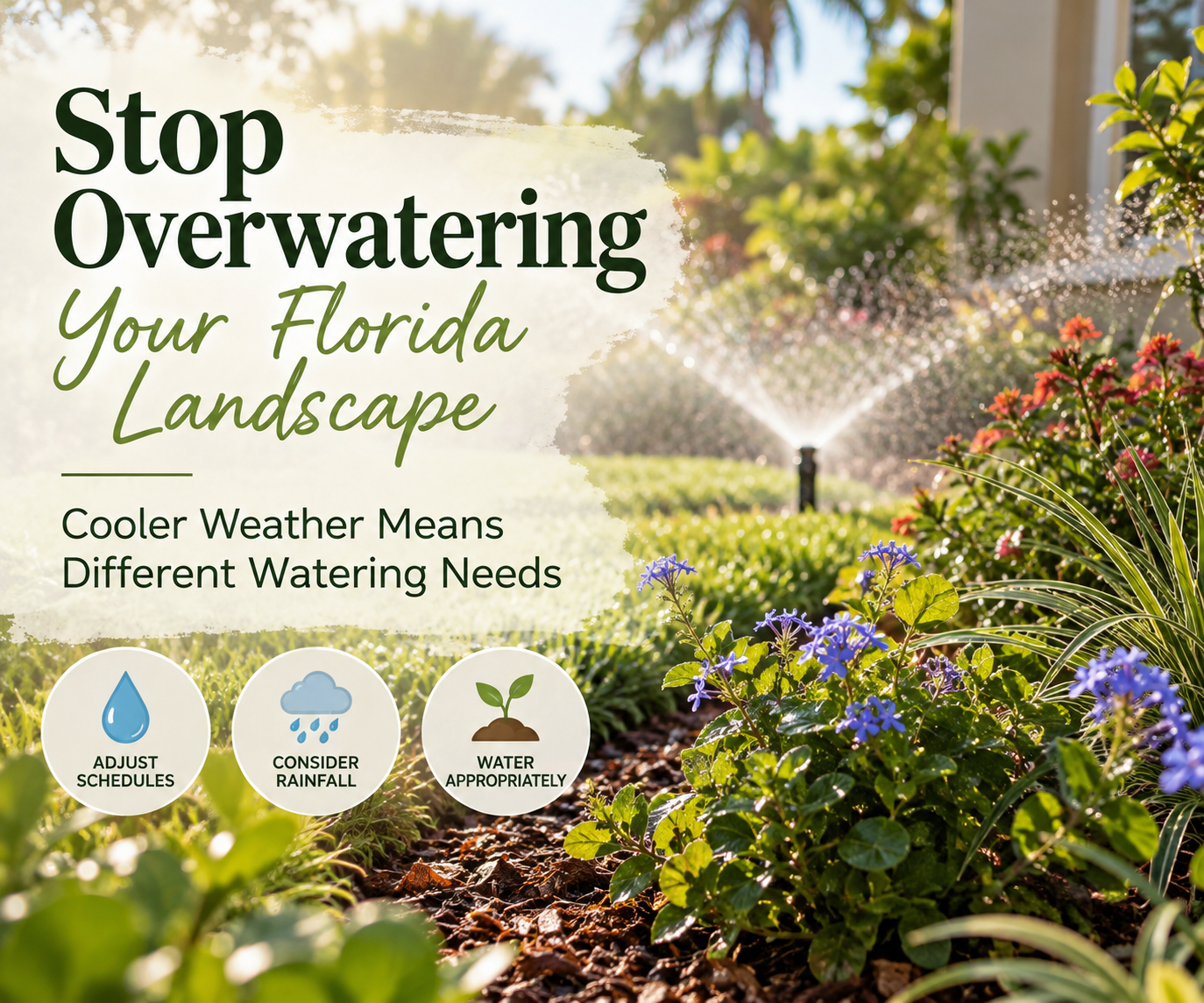
Just because your irrigation system ran all summer doesn't mean it needs to keep running the same way.
As we move into November, Florida gardeners finally get some relief from the intense summer heat. The days are getting shorter, temperatures are becoming more comfortable, and many of our plants are beginning to slow their growth.
But there's one thing homeowners often forget to adjust as the seasons change: their irrigation systems.
I see it all the time. Irrigation schedules are set during the summer months and then left running exactly the same way throughout fall and winter. Meanwhile, plants are using less water, and the soil may be staying moist longer than it did during those hot summer days.
And sometimes, all that extra water is doing more harm than good.
Your Plants Don't Need the Same Amount of Water Year-Round
During our Florida summers, high temperatures, longer days, and active plant growth can increase water demand. But as temperatures cool and daylight hours decrease, many established landscape plants need less supplemental irrigation.
That doesn't mean you should stop watering altogether. Florida can experience extended dry periods during fall and winter, and sandy soils can dry out quickly.
The key is adjusting your watering schedule to the actual conditions rather than following the same routine all year.
Too Much Water Can Be Just as Harmful as Too Little
Overwatering is one of the most common problems I encounter in residential landscapes.
When soil stays saturated for too long, roots struggle to get the oxygen they need. This can lead to declining plants, root problems, yellowing foliage, and increased susceptibility to certain diseases.
And here's what makes it tricky: an overwatered plant can sometimes look very similar to an underwatered one.
Wilting and yellowing leaves don't automatically mean a plant needs more water.
Before increasing irrigation, check the soil several inches below the surface. If it's already moist or wet, adding more water probably isn't the answer.
Newly Installed Landscapes Are Different
This is especially important to understand if you've recently had a landscape installed.
New plants need consistent moisture while their root systems become established, even during cooler weather. Their watering requirements are very different from those of mature shrubs and trees that have been growing in the landscape for years.
I always provide watering guidance after an installation because proper establishment is one of the most important factors in long-term plant success.
Don't reduce watering for newly installed plants simply because the calendar says November. Pay attention to their establishment stage, soil moisture, rainfall, and individual needs.
A Few Simple Watering Habits Can Make a Big Difference
You don't need to become an irrigation expert to make better watering decisions. A few simple habits can help:
Check your irrigation settings. Reduce unnecessary watering as temperatures cool and plant water demand decreases.
Pay attention to rainfall. Don't water simply because it's a scheduled irrigation day.
Check the soil before watering. The surface can look dry while moisture remains several inches below.
Water deeply when needed. For established plants, appropriate deep watering generally encourages healthier root development than frequent shallow watering.
Know your plants. A drought-tolerant shrub, a newly planted tree, and a moisture-loving perennial won't necessarily have the same watering needs.
And remember, even native and drought-tolerant plants need supplemental water while they're becoming established.
Work With the Season, Not Against It
One of the biggest lessons I've learned as a Florida landscape designer is that our gardens don't need the same care every month of the year.
Our weather changes, our plants respond, and our maintenance routines should change with them.
As we head into the cooler months, take a few minutes to look at your irrigation schedule. You may be surprised how much water you can save simply by paying closer attention to what your landscape actually needs.
A healthy landscape isn't necessarily one that gets watered more. It's one that gets watered appropriately.